
I really struggle to deal with anger, and lately there have been a lot of legitimate reasons to be angry. I think I struggle with anger so much because I grew up with a mother who was constantly angry, hateful and disparaging towards anyone she decided was less worthy of humanity.
Unfortunately, lately I feel as though that same way of talking about people has become increasingly normalised in parts of the media and, in my view, has been reinforced by the recent Supreme Court ruling and the debates that have followed, particularly around trans people. As the very proud mother of a trans son, I am really angry and really upset. This world feels increasingly different from the one I thought I was bringing him into.
The Supreme Court Ruling and the Equality Act
On 16 April 2025, the UK Supreme Court unanimously ruled that, for the purposes of the Equality Act 2010, the terms “woman”, “man” and “sex” refer to biological sex. In practical terms, this means that obtaining a Gender Recognition Certificate does not change a person’s sex for the purposes of the Equality Act.
Gender and sex are different concepts, yet following the ruling it feels as though gender has become increasingly invisible in the way trans people are discussed. As the mother of a trans son, that isn’t an abstract legal debate to me. It raises real concerns about everyday parts of his life, from how services will treat him to something as ordinary as his ability to use a public toilet.
What I find particularly frustrating is how little these discussions seem to acknowledge trans men at all. The public conversation often feels as though they barely exist. My son is a man. Yet policies and guidance that are presented as protecting one group can leave people like him wondering where they are actually supposed to go, or whether they’ll be challenged simply for trying to use a toilet.
We’re told this is to protect the “privacy and safety” of cis women. As a cis woman myself, I think that’s the biggest load of crap I’ve ever heard.
Why Is It a Big Load of Actual Crap?
The long and short of it is this: I don’t believe protected characteristics should be up for debate.
My son’s ability to use a public toilet is not something I ever imagined I’d have to defend. It’s ludicrous that I’m expected to argue with angry strangers on the internet over whether he should be able to carry out one of the most basic human functions in privacy and peace.
The relentless focus on trans people has, in my opinion, stripped them of the same empathy we naturally extend to everyone else. People stop seeing ordinary human beings and start seeing a political issue.
My son isn’t a political issue. He’s a person. He studies, earns firsts at university, worries about deadlines, laughs, goes shopping, gets hungry and, yes, sometimes he needs the toilet. It shouldn’t be controversial to say that he deserves to do that with dignity.
Trans people are estimated to make up around 0.5% of the population. For such a small minority, the amount of attention they receive in political debate and the media feels completely disproportionate to me.
If we’re talking about protection, it’s my son who needs more of it. He spent years on an NHS waiting list without receiving the gender care he needed and ultimately had to access private treatment instead using his student loan. We’re constantly told services are under enormous pressure because of increasing demand, yet we’re still talking about a very small proportion of the population. From where I’m standing, the system hasn’t failed because there are too many trans people. It has failed because it hasn’t been able to provide timely basic medical care for the people who need it.
My son has already had to fight for basic medical care simply because he is trans, and now people are debating whether he should be allowed to use a public toilet. Where exactly does this end?
What About WOMEN Though?
I am a feminist, but I am not a TERF. I care about women a great deal.
The greatest risk to women isn’t using a toilet. It’s probably walking home alone at night.
We had so many important conversations after what happened to Sarah Everard about violence against women and girls. Yet, from my perspective, so much of the conversation about “protecting women” has ended up focusing on restricting trans people’s access to toilets.
If I go out alone at night, I’m not worried I’ll bump into a trans person. I’m worried that I’ll be followed home, chased, and have to hide under a car AGAIN to avoid something worse happening to me. Then, if something bad does happen, the media somehow finds a way to blame me, as though women should be held to a curfew to keep themselves safe.
Do you know who else is afraid of going out at night? Trans people. They are also disproportionately affected by hate crime, and the UK statistics are absolutely horrendous.
The toilet rules aren’t even going to protect anyone from anything.
When I was younger, I worked in a bar. We used to do toilet checks every hour. Everyone assumes those were for cleanliness. During the day they were, but on a busy weekend night checking for cleanliness was almost pointless. We were checking that everyone was in the correct toilets because toilet rules have never stopped men from entering women’s toilets.
Every single weekend we’d have to get security to remove a cis man from the women’s toilets. There were often lurkers too, looking for an opportunity. My pub had a list of banned people, and it just kept growing. Those checks were important because they helped keep everyone safe.
Now I think back to that job and genuinely wonder how I would have been expected to enforce the new guidance. Imagine finding someone who appears to be a cis man in the women’s toilets, only for them to say they were assigned female at birth. As a member of staff, what exactly am I supposed to do with that information? He is saying he has every right to be there, like my trans son now has. There is no practical way to verify it and, despite what some people claim, you cannot tell someone’s sex or trans status simply by looking at them. From my perspective, that doesn’t make women safer; it makes an already difficult job even harder.
Then there are masculine presenting cis women, androgynous women, strong muscular women with short hair. How do these rules protect them? Cis women don’t all look the same. (“Real women have curves” always drove me absolutely mad. I didn’t even have curves when I was pregnant.) If there is no single way that all cis women look, how are staff supposed to police any of this without challenging women who are simply perceived as looking “too masculine”?
Thinking back to my years working in a bar, I honestly don’t see how these rules would have helped me keep women safe. I think they would have made an already difficult job significantly harder.
The Effect On Us
When I see weeks of headlines, debates and endless discussion about trans people, it skews my perspective of the world. It is absolutely terrible for my mental health as the parent of a trans son. I see what it does to my son, and even then I can’t fully imagine what it must feel like for him, or for other transgender people.
I deal with OCD, and it is often a struggle to leave my house as it is. It’s something I have to build myself up for. I even wrote a blog post about going to the cinema for the first time in decades because my OCD made something as simple as watching a film feel overwhelming.
My job as the parent of an adult isn’t to hold him back. It’s to encourage him to go out into the world and build his own life. I am incredibly proud of him for doing that, but that pride is always clouded by worry. I worry whether he’ll be safe using a toilet, whether he’ll be safe on a train, whether he’ll be safe walking home if the train is late. I also worry about his mental health in a world that has become more and more hostile towards him.
The world the media suggests we’re living in is not the world I experience every day. While trans people do face a higher risk of violence and hate crime, most people simply get on with their lives. But when a minority group is repeatedly framed as a problem to be solved, it changes the atmosphere people live in. It makes the world feel less safe. Living with that feeling is exhausting for anyone, but when you already have mental illness it becomes another thing you have to fight every single day.
If this is how much it affects me as a parent. I can only imagine how much more difficult it must be for trans people who are dealing with OCD or other mental health conditions themselves. Following the Supreme Court ruling, Samaritans reported a significant increase in calls from trans people experiencing suicidal thoughts.
I am so angry because this is not the world I thought I was bringing him into. I watched society move forwards. I watched gay people gain civil partnerships and then equal marriage. I genuinely believed that, while there would always be prejudice, we were moving in the right direction. Instead, it feels as though we’ve started walking backwards.
Part of why this affects me so deeply is because it reminds me of growing up with my mother. She hated people simply for being different, including her own daughter and grandson. She never needed a reason. Today, prejudice is often wrapped in arguments about safety or justified by pointing to isolated or extreme cases, but the intensity of the reaction still feels completely disproportionate to me. It brings back that same feeling of constantly hearing people justify why someone different deserves less understanding, less dignity or fewer rights.
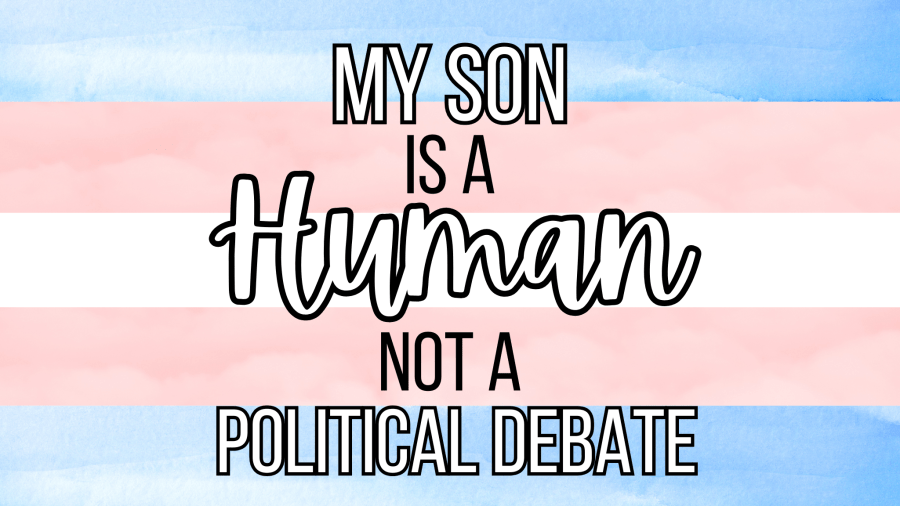
My son isn’t a political issue. He isn’t a culture war, a headline or a debate. He’s my son. He’s a young man trying to build a life, study, travel, use a toilet and exist in the world like everyone else.
That shouldn’t be controversial.
It should simply be human.
Note:- This post isn’t EVERYTHING I think or feel about the Supreme Court ruling. I don’t even think this should be a debate. As the mother of a trans son, and as a cis woman myself, I also think it’s important to stay in my lane. I really encourage you to seek out trans voices too, especially trans men, who have been largely left out of the conversation around this ruling. If you’re looking for somewhere to start, I’d recommend Evan (@beyondevan on TikTok), who speaks about the ruling and answers a lot of common questions.


So sorry for you and your son. It’s really bad in the U.S. too for trans people under this current (horrific) administration.
LikeLiked by 2 people
Yeah I’ve seen that in America too. Really sad. Our situation here is, imagine you voted for the other side, they won, but then they still did this.
LikeLiked by 1 person
😢 😢 😢
LikeLiked by 1 person
The mob borrows certainty; the wise borrow compassion. 🙏
LikeLiked by 1 person