Behind my son’s birthday was everything I had to swallow to make it a good day. It really was a beautiful day. I laughed. I bought him froggies. I was present. Everything I wrote in my last post happened exactly like that.
And underneath it, I was holding a lid on something that threatened to spill the moment I lost focus.
I’ve been struggling with depression and stuck in ambivalence with recovery for months now. Not fully relapsing. Not fully recovering. Just suspended. After working so hard to keep that lid pressed down for his birthday, it turns out you can only patch a leak with duct tape for so long before the pressure builds and the flood is bigger than you can contain.
Basically, after his birthday I crashed hard. My ED is loud again. I’ve been crying most nights.
Everyone says it’s fine to sit in ambivalence. That you can’t rush recovery. That at least I’m a healthy weight now. But how long do you get to sit here before it stops being a stage of recovery and starts being your life? Standing still isn’t the same as moving forward. In fact, standing still made my body drag me forward anyway.
And it all started with putting my knee sleeves on, on my son’s birthday.
Knee Sleeves of Betrayal
Putting my knee sleeves on to go outside is non-negotiable. My knees have hurt for years; without them, one long walk can mean days of pain. They’re meant to be a symbol of ageing joints, not existential crisis.
But on my son’s birthday, they became a symbol of something else. I could barely get them up over my quads. My hamstrings spilled out the back, the fabric digging in and pinching behind my knee.
OH NO.
Corrupted Clippy immediately entered the chat:
“OMG YOUR WEIGHT GAIN IS SPIRALLING OUT OF CONTROL. NOW YOUR KNEE SLEEVES DON’T FIT AGAIN.”
I’ve gone through XS, then S. These were M. I guess I now need L. I was already taking the L emotionally for being so upset about knee sleeves, so needing a literal size L felt loaded with meaning.
The problem is, I haven’t been intentionally gaining weight. I’ve been maintaining. Holding steady. Or at least trying to. Apparently my thighs – especially my hamstrings – decided to grow anyway. I never fully believed you could build noticeable muscle at maintenance calories, but my body decided to provide anecdotal evidence to the contrary.
It wasn’t dramatic. It was slow. I’ve been suspended in ambivalence for months now. Not moving forward. Not moving backward. Clinging to the minimum healthy weight for my body – the place where extreme hunger finally quiets – terrified of even the smallest step upward.
Then I pulled on my leggings. The same pair I’d worn two days before.
Too tight. Brilliant.
I didn’t have another size in the flat. So I walked all around Cardiff in too-tight knee sleeves and too-tight leggings because I was not missing my son’s birthday.
Every step was a negotiation. Every pinch of fabric felt like proof that my body was moving ahead without my consent. Two steps forward while I was trying to stand still. I felt powerless. Out of control.
My ED has been loud ever since.
It feels like I’ve reached a crossroads where ambivalence is no longer neutral. Where standing still isn’t an option because my body refuses to stay there with me. It seems determined to grow. To heal. To change.
And I don’t know how to be less petrified of that.
Uncomfortability is Expected in Healing
Everyone says discomfort is where change happens. They’re not wrong. No one grows without some level of discomfort. But I don’t think all discomfort is the same.
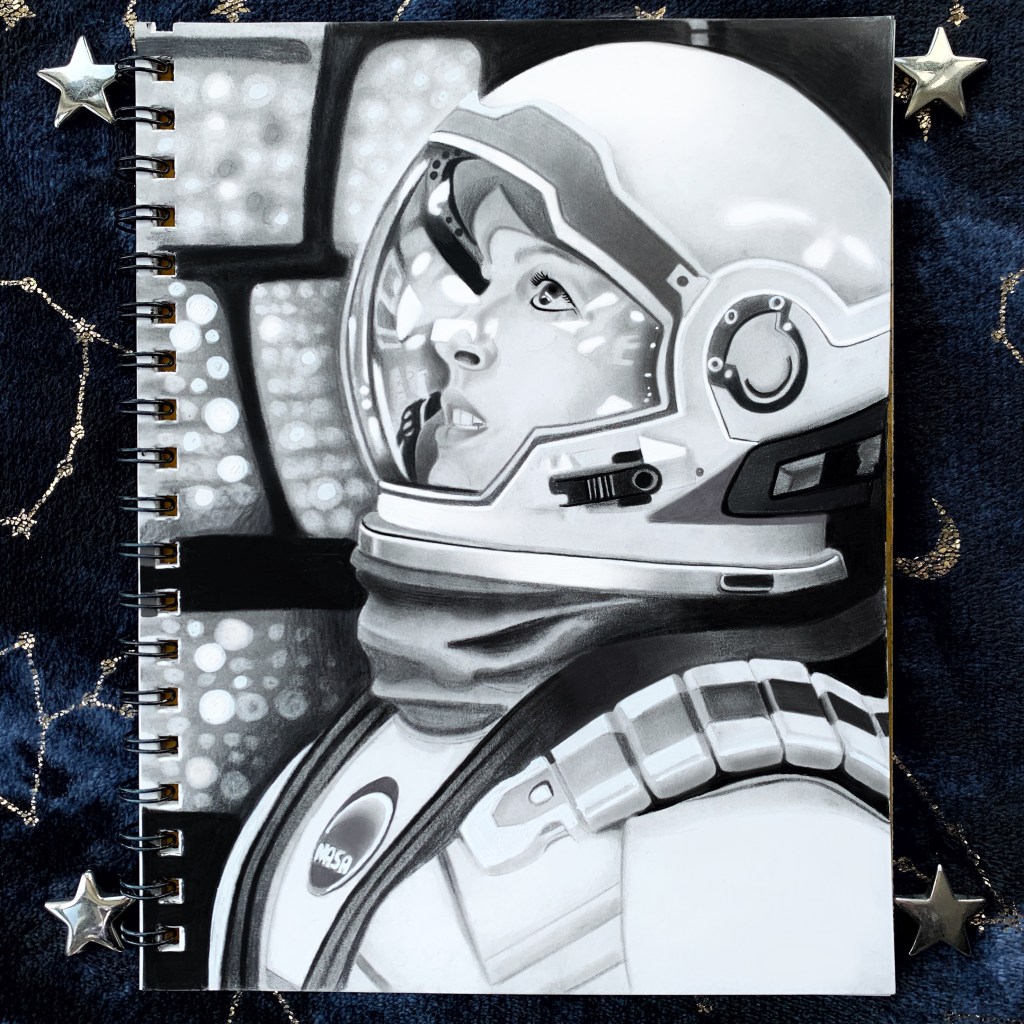
When I learned art, it was uncomfortable to be bad at it. To sit through messy stages. To produce drawings that didn’t match what was in my head. But I kept going. Progress was visible. Before and afters. A new technique learned. A line steadier than the last one.
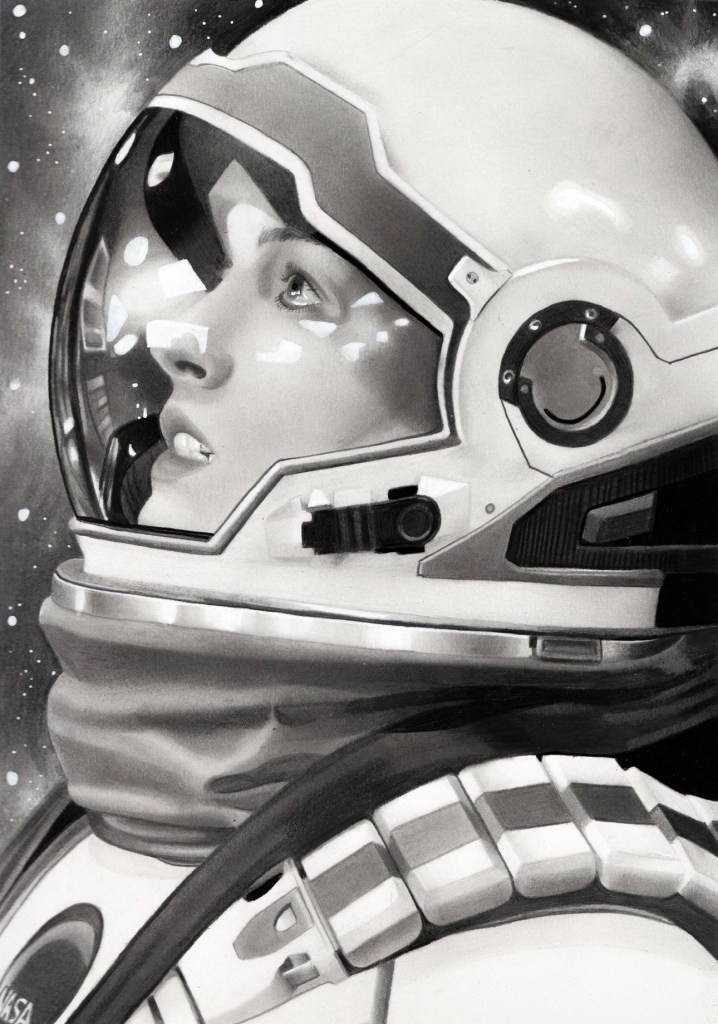
It was uncomfortable, yes. But it wasn’t life or death. It wasn’t suffocating. The discomfort of gaining weight with an eating disorder is different. It’s like sitting in a high-rise building that’s on fire, and being told the only way out is to stay inside. People tell you that’s what healing is while comparing it to butterflies and rainbows. But the heat builds. The smoke thickens. Every instinct screams to escape. You find yourself staring at the window, not because you actually want to jump, but because you want the burning to stop and would do anything to make that happen.
Corrupted Clippy – my ED – appears beside me and says,
“I know a way to make this stop.” It points to the window with a smile on it’s face.
I know it’s not safe. I know where that window leads. I know what happens when you jump. But the heat is real. The suffocation is real. The urge to escape is desperate and physical. From the outside, people see someone standing in a burning room and wonder why she keeps looking at the window because they know how dangerous that is. They don’t understand that staying put feels just as dangerous.
Ambivalence is standing with one foot inside the fire and one foot still in the hallway. Not jumping. Not fully walking into the flames either. Just hovering there, neither escaping nor committing to the burn.
Everyone says healing requires discomfort. They’re still right. But this isn’t the discomfort of learning a skill. It’s the discomfort of reliving trauma. Of sitting with grief. Of becoming initially and immediately increasingly mentally unwell. Of watching your body change when your mind isn’t ready. It’s suffocating heat, not gentle growing pains.
It’s knee sleeves pinching behind your legs. It’s leggings suddenly too tight. It’s clothes pressing into ribs that already hurt. It’s feeling like you’re being dragged somewhere before you’ve agreed to go.
I know healing isn’t butterflies and rainbows. I know it means sitting in things I’d rather outrun. But I don’t know how to stop being petrified of the fire long enough to walk further into it.
The Set Point Antagonist
People assume fear of weight gain in eating disorders is about vanity. Or worse, they reduce it to faulty values, as if I absorbed something toxic about fatness and never questioned it.
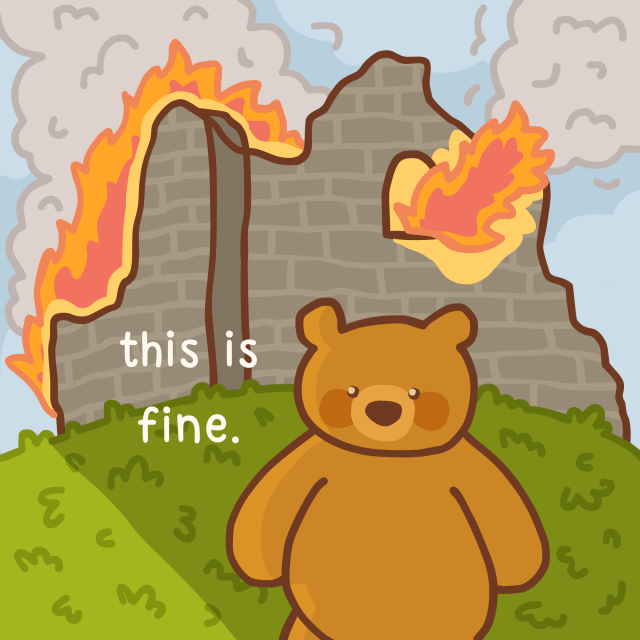
For me, that isn’t true.
First, this isn’t about fat. It’s about numbers. I couldn’t care less if I gained 3kg of intracellular creatine water – the scale would still go up and I’d have a meltdown. It’s not composition that rattles me. It’s the number jumping chaotically like an episode of Numberwang.
Second, I did not think I was “fat” at my upper set weight. I have no strong aesthetic opinions about my body there. I’m not afraid of how I looked. I was completely dissociated from how my body looked. I’m instead afraid of what that weight represents.
For me, weights are destinations. They are timestamps.
My set weight is the weight I was when my best friend died of cancer. When I lost her and, in many ways, lost myself. It was the year my identity as a very present, very needed mother shifted as my son became more independent. The year I found a lump in my breast – the same year she died of breast cancer – and sat in terror waiting to see if I would join her.
Two cancer scares. Both thankfully nothing. And yet survivor’s guilt because I got good news and she didn’t. Why me? It was also the weight I was when I realised I had to go no contact with my mother after she hurt my son deeply. That weight isn’t a number. It’s a year.
And I’m not ready to stand in that year again.
Staying slightly under my set weight has meant something else, too. When you sit just below where your body wants to be, there’s still food preoccupation. Clippy – my ED – is still in my ear every day. Loud, but familiar. There’s something to manage. Something to optimise. Something to fix.
I would rather listen to Clippy than feel the full weight of what I’ve been through.
Being frustrated that my body changes. Crying because I’m still hungry even when I fuel adequately. Getting stuck on the unfairness of that. Being furious that my body seems to be urging me forward. Being genuinely devastated over knee sleeves. It’s exhausting. It hurts.
But it’s still more bearable than standing emotionally exposed without the buffer. Because when I reach my set weight, Clippy gets quieter. And when Clippy gets quieter, everything else gets louder.
The grief.
The trauma.
The identity loss.
The survivor’s guilt.
The fire intensifies before it ever burns out – if it ever does. I have bipolar. There will always be some fire. A depressive backdraft. A hypomanic blaze. So maybe the real question isn’t, “How do I gain weight and tolerate the number?” Maybe it’s, “How do I sit in the fire that comes after the number rises – and not jump?”
Because every time I’ve tried over the past several months, I’ve ended up at the window again.
The MacroFactor Tango
Throughout this stretch of ambivalence, I have still tried to get out. Many times.
MacroFactor asks me every week whether I want to stay at maintenance or change my goal. I’ve lost count of how many Mondays I confidently selected, Gain weight. This is the week.
And then by Wednesday, I’m retreating with my tail between my legs. Day three hits, the surplus feels unbearable, I panic, and I try to undo it. Shame follows. Anxiety follows. And, predictably, my mental health drops further.
The cruelty of ED recovery is that your mental health often gets worse before it gets better. Of course it does, if it feels like you’re standing in a burning building. My thoughts turn existential:
I don’t know who I am anymore.
What’s the point of any of this?
What am I even recovering for?
How am I supposed to do this without my best friend, when we recovered together last time?
It’s unbearable. So I retreat back to maintenance. Tell myself I’m a failure. Hate myself for quitting.
I argue with myself daily:
Why are you so upset? It’s just weight. It’s just food. It’s just clothes getting tighter. There are bigger things in the world. Stop being self-involved. This isn’t who you are.
No one has ever drilled themselves out of a mental health spiral, but I keep trying anyway. It’s hard to see outside your four walls when, inside them, everything feels like it’s on fire.
And now ambivalence doesn’t even feel safe. I gained muscle at maintenance, which means my body doesn’t seem content to stay there anymore. Hunger is louder. My body feels like it’s pushing forward whether I consent or not.
So I’ve done the MacroFactor dance again this week. It’s currently set to gain. And I’ve spiralled every day because of it. Watching the scale trend upward. Feeling like I want to jump out of the window just to escape the heat. Crying because I feel completely lost. My depression dipping lower than I thought it could.
You think you’ve hit rock bottom, and then you discover your depression has a basement.
I know I have a tendency to want to solve everything immediately. To fix it now. But I’m never going to feel ready for this. Things are never “settled.” There will always be a reason to wait. A justification. A new fear. Having been in recovery previously for 12 years means I’m unfortunately aware of where my body is happiest with weight, and I can’t ignore that.
Maybe there isn’t a better reason to move forward than this: my body has already started. Right now it feels like we’re no longer running as a team. It feels like competition. I’m the Canadian hockey team staring all sad at a silver medal and plushies while my body celebrates its new gold-medal muscles.
First things first though: buy new knee sleeves and leggings.
Try to take the L without turning it into a loss. And maybe, one day, I’ll learn to celebrate that my body wasn’t betraying me – it was winning something I was too scared to claim.
 Absurd Universe
Pingback: Oh the IRON-y – Absurd Universe