I’ve been really struggling lately because my body has been sending mixed signals since Covid – hunger cues firing like alarms, exhaustion flattening me, and my eating disorder recovery trying to coexist with a body that can’t function the way it did before. Covid recovery and ED recovery have collided, and both are exerting their own gravity. One pulls me toward feeding every cue, the other pulls me toward stability and function, and I’m stuck in the middle trying to work out which signal is truth and which is just noise from a system out of calibration.
That’s the part no one talks about: hunger isn’t always honesty. Sometimes it’s just chaos from a body that’s overwhelmed, underpowered, recovering, inflamed, or exhausted. And when you’re dealing with chronic fatigue, post-viral crashes, and a tanked NEAT, hunger can lie loudly enough to drown out your actual needs.
That collision – between what my body asks for and what my body can actually use – has bent everything out of shape. It’s left me exhausted and confused, trying to work out whether these forces are forging me into something stronger… or whether they’re pulling me toward collapse. It’s hard to know, in the moment, whether you’re dealing with the gravity of a star or the gravity of a black hole.
I’ve felt frozen in place, scared to move in any direction because it might be the wrong one. But eventually I had to choose the direction that mattered most: function. Because function is the only place recovery can actually live.
The Covid Recovery
Since getting Covid over a month ago, everything has been a struggle. My eyes burn and fatigue instantly. I crash after doing almost anything: blogging, cleaning, showering – even existing. I’m sleeping far too much, sleeping through alarms, and waking up feeling no better. My heart races with the slightest activity. I sweat buckets even when I’m freezing. I walked to Lidl in the cold and somehow sweat through my top, cardigan, coat, and backpack.

I get breathless doing almost nothing. My lungs feel like I’ve smoked for decades. My nose keeps bleeding. My skin is reacting more. My brain fog is so bad that words slip away mid-sentence.
But the biggest impact has been on my anorexia recovery.
My appetite has gone completely rogue. Because my fatigue is so extreme, my body seems convinced that food will fix it. My hunger has become disproportionate to what my body can actually use. I didn’t just regain the weight I lost from Covid – I gained above it. My activity levels are so low that my body simply can’t burn what it used to.
After anything – food shopping, cleaning, even my birthday – I crash for 1–2 days and can barely move. I end up stuck on the sofa watching old Waterloo Road episodes, trying not to fall asleep again. It’s been dreadful.
My NEAT (all the unconscious movement that usually keeps me going) has absolutely tanked. My pre-Covid meal plan is now far too high for the body I currently have.
I gave it three weeks to settle. The weight gain didn’t stop. Fast, unintended weight gain only makes my fatigue and joints worse. Slow, steady recovery turned into fast, exhausting recovery – without me choosing it. So I’ve had to adjust my meal plan. Not as restriction. But because my current body and current energy levels are not the same body I had pre-Covid.
And that’s where the mess happened:
Covid recovery and anorexia recovery collided.
Both exerting their own gravity.
And I’m stuck in the middle.
Why This Isn’t Restriction
People in recovery spaces seem to accept that:
– fullness can be wrong
– lack of hunger can be wrong
…but hunger is always right because “your body knows what it’s doing”. If that were true, then lack of hunger wouldn’t be labelled “wrong” in recovery either. Either the body always knows – or it doesn’t. It can’t be both.
If you consistently eat above your maintenance – especially when NEAT crashes – appetite cues can start expecting that same intake, even when your body can’t actually use that much energy anymore. It’s how people get stuck gaining weight without trying: their body has adapted its hunger signals upwards, even though their needs have dropped. They’re not sat there all day pushing past full. That’s unfair to suggest that, they’re just listening to internal upregulated cues and trying not to be hungry.
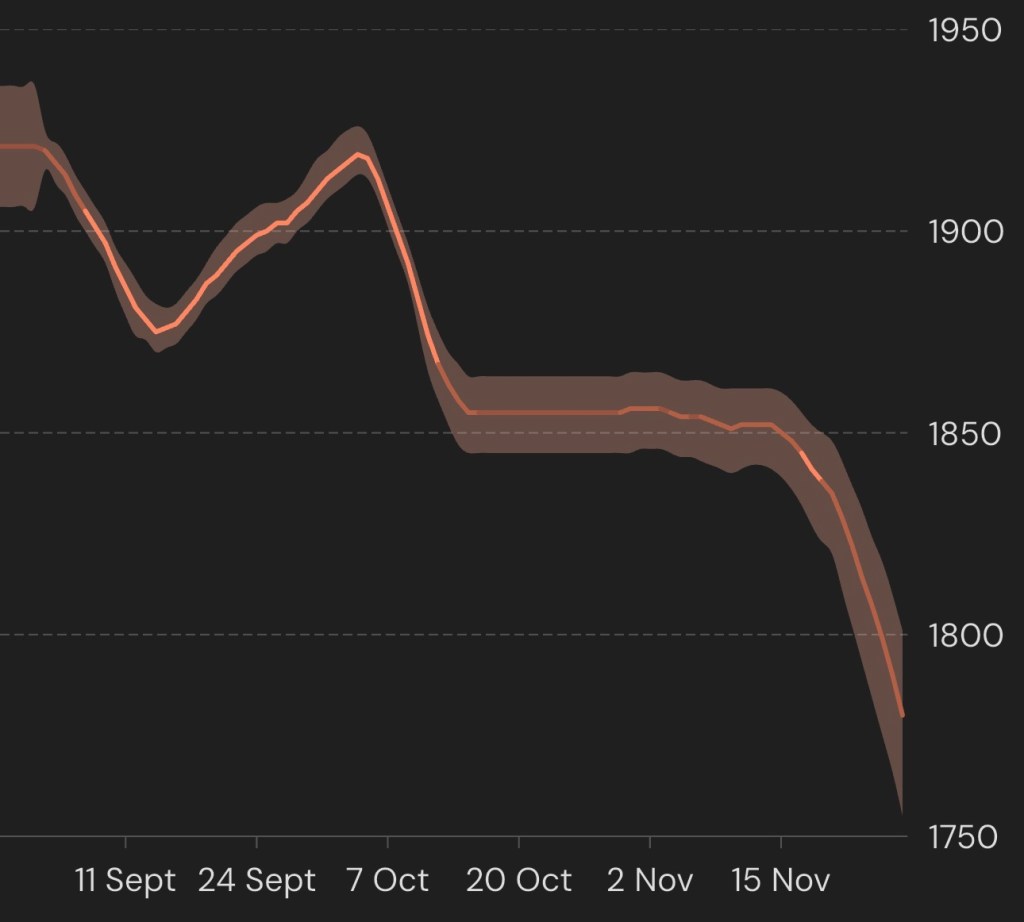
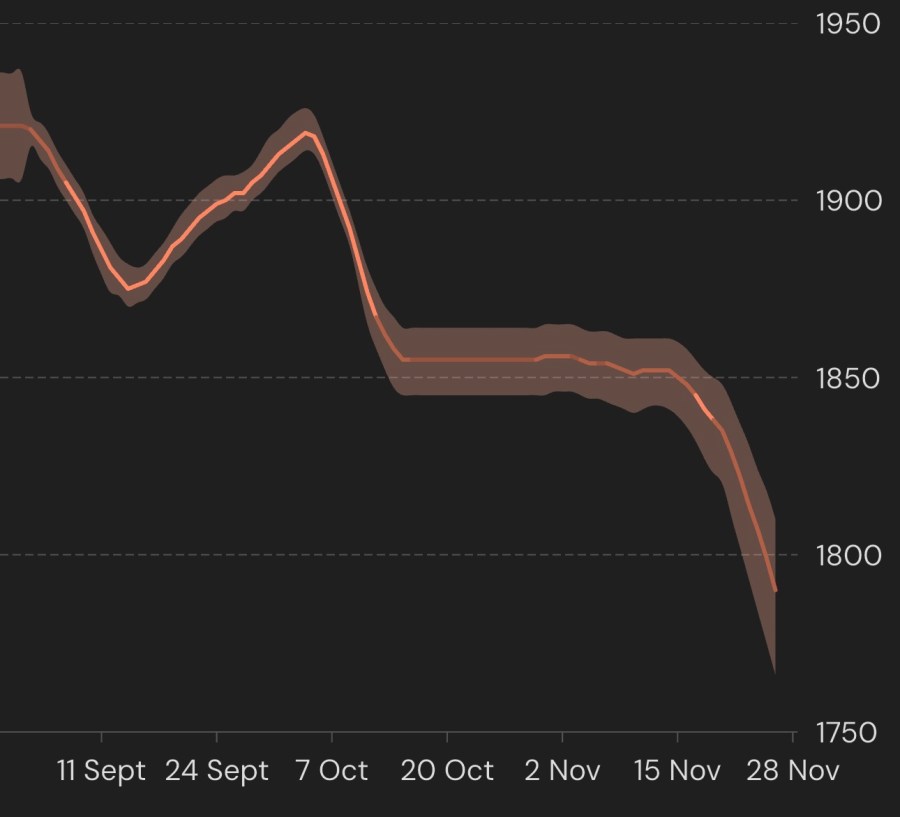
That’s exactly what I’ve been dealing with since Covid. My body is hungry for my pre-Covid amount – but my current capacity is hundreds of calories a day lower. So I’ve been slowly reducing calories, giving it time, watching the weight trend, not the noise – and I’ve finally found my real maintenance again.
The thing is: when you’re too far above your maintenance – especially because illness has wiped out your activity – you get consequences:
– disrupted hunger
– disrupted fullness
– food cravings and binge urges
– lethargy
– fatigue after eating
– worsening symptoms
My pre-Covid meal plan was making my post-Covid fatigue, lethargy, and hunger cues worse. It isn’t restriction. It’s responding to the maths of a different body than the one I had two months ago.
I worked so hard in early recovery to rebuild my activity levels despite chronic fatigue. Now I feel like Covid has knocked me back further than before – and on top of that, the mould in my flat has flared my allergies, and perimenopause is ramping up so fast I’m typing this while having a hot flush. There’s a lot going on in my body that would cause hunger cues to be completely inaccurate.
I shouldn’t have to explain that doing less activity means needing fewer calories. That isn’t disordered. That’s physiology.
It Really Wasn’t Easy
Reducing my meal plan wasn’t as easy as I thought it would be. It felt like restriction even though it wasn’t, and that feeling alone was enough to scare me. The maths of my body have changed since Covid – my NEAT has tanked, my fatigue is through the floor, I’m 42, and my maintenance simply isn’t what it used to be when I was cleaning more, fidgeting more, doing more than just laying on a sofa all day. I’m not reducing food to be smaller; I’m reducing it because my body is temporarily using less energy.
But emotionally, it collided with the memory of restriction, and that’s what made it so difficult.
The truth is, at my current maintenance, my meal plan becomes “function-first.” I need 120g of protein a day for recovery and because I’m 42. I need at least 45g of fat for hormones and brain function. I need 25g+ of fibre or my digestion riots. And I need enough carbs even though my appetite barely asks for them. Once all of that is in place, there isn’t much room left for “joy foods” – and that’s the part that hurts, because joy foods were the thing I worked hardest on in recovery.
They always say, “Wait until you’re weight-restored to reintroduce fear foods,” but now, with my post-Covid activity so low, some of those foods simply don’t fit my temporary maintenance. Not for ED reasons, but for boring, practical ones like: blood sugar crashes, protein needs, fatigue, joint pain, or the fact that a Gregg’s muffin is literally the size of one entire meal for me at my current calories. If I have one, it replaces a meal and leaves me under-fuelled.
That’s the difference between recovering at 42, with a post-viral body, and recovering at 18 with sky-high activity. It isn’t restriction. It’s adaptation – and it comes with grief.
Eating for function, being falsely hungry all the time, saying no to foods I genuinely enjoy… it all felt like being back in my relapse at first. My mood tanked. I was upset. I felt like: What was the point of recovering if this is the life I recover into? A life of function, not choice? I hated having to turn down foods not because I feared them, but because my body simply cannot cope without the burrito bowl that stabilises my blood sugar, my energy, my digestion, my joints.
I think “Eat what you want whenever you want” is wrong anyway. What I’ve actually learned is:
Eat what your body wants – what makes it feel good, what stabilises you, what supports your conditions. Your wants still matter, but your body comes first.
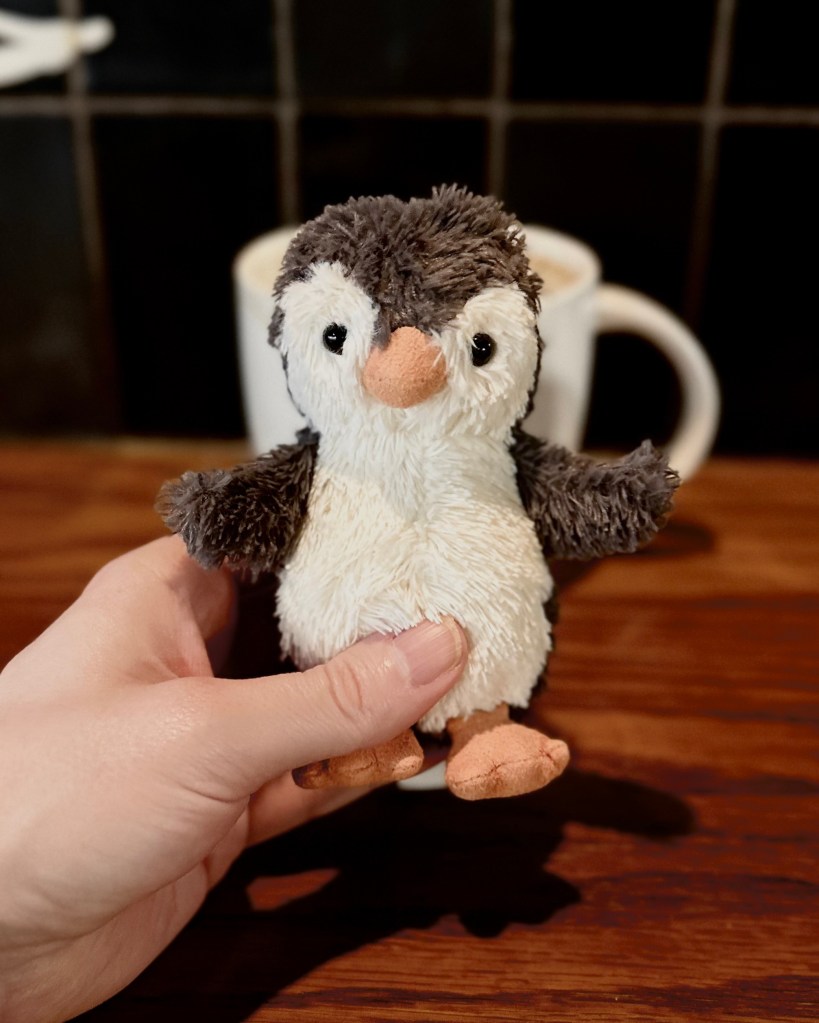
It’s the same with money: I want 100 Jellycat bears, but I have to pay bills first. My meal plan right now is all bills and no Jellycats. If I ate whatever I wanted whenever I wanted, I’d be smashing pistachio-based products all day for dopamine and feeling absolutely atrocious. My wants are hardly aligned with what my body needs.
And honestly, that’s why I’ve been quiet here. I’ve been struggling with this, and I knew it was probably the most dangerous thing I’ve faced in recovery. It triggered me a lot. Clippy – my eating disorder voice – got loud. Loud enough to tell me to cut further. Loud enough to suggest losing weight instead of maintaining. Loud enough to tempt me into a relapse I absolutely do not want.
I felt horrendous. I sat here hungry all night doing the same behaviours I did during my relapse just to take my mind off food. And eating at maintenance when my body thinks I’m in a deficit didn’t even give me the deficit-high – so I didn’t even get that false reward. It was just days of hunger, clock-watching, and being Kevin the Teenager about everything:
“It’s not fair. I hate this. I hate everything.”
But then, finally…
it started working.
Function Rules All
Throughout my recovery, I’ve done everything I can to improve my function – because with my conditions, blood sugar issues, and chronic fatigue, function isn’t optional. It’s my quality of life. The way I recovered is the reason I started functioning better than I had in years. I did everything the internet tells you not to do. I gained muscle, rebuilt stability, supported my blood sugar, ate balanced with a lot of whole foods and did all the unglamorous rehab physio work I found on YouTube of weight gain. Function has always mattered most to me.
Right now, though, I’m not functioning at all – and that’s what pushed me into making this change.
And the frustrating thing is… the change has started helping.
After day five of reduced calories, something finally shifted. My hunger calmed down. My limbs felt less like concrete. I could focus slightly better. I wasn’t clock-watching or fighting intrusive thoughts about food all day. I could stay off the sofa a little longer before crashing. And my weight trend finally stopped climbing so fast and stabilised, which my joints desperately needed – fast weight gain absolutely wrecks my knees.
Playing around with my meal plan timings helped, too. The shape of the days started to feel more manageable.
It was such a turnaround from where I was. A few days earlier I was ready to give up, convinced I’d ruined everything, convinced I couldn’t do this anymore. Crying about missing my sourdough because sourdough is too hefty calorie wise (Sourdough is a big liar it often says 150 calories a slice, but if you weigh it, it often has 268 calories per slice). But doing this – adjusting for where my body actually is right now – reminded me of something I seemed to forget:
Function comes first. Always.
I do feel like I’m back at the start of recovery again, doing graded activity from not being able to do anything at all. But that’s just where I’m at. My plan going forward is the same as early recovery: increase movement slowly over the next few weeks, and increase calories slowly alongside it, until I’m back to the activity levels (and joy foods) that actually feel like me.
It isn’t “normal life” and it wont ever be. I had chronic fatigue syndrome before getting Covid. But it’ll be better than this sofa existence. It’ll hopefully give me one or two more spoons a day – and when you’re dealing with post-viral fatigue, mould allergy flare-ups, perimenopause, and everything else, a couple of extra spoons is life-changing.
I just can’t live like this.
I can’t live when I’m so exhausted, in so much pain, and crashing after doing one task so much so I couldn’t even blog or do anything fun.
Fixing that matters more to me than being able to eat a Greggs muffin right now. It matters more than the internets version of a healthy relationship with food, when this is actually what one is. Eating food that helps you function better, helps you live your life, gets you off the sofa.
And it’s taken me a while to accept that because it’s not what anyone sells about recovery or intuitive eating – but it’s the truth.
My body needs stability first. Joy can come back once I’m functioning better, because it’s impossible to feel joy anyway when you’re not functioning and in so much pain.
The Neutron Star Collision.
I don’t know exactly how long this will take, or how long my body will keep insisting on this lower-activity version of me. I just know that right now, function has to come first. I’ve spent months chasing hunger cues that weren’t telling the truth, and finally I’m learning to listen to what my body actually needs: steadiness, stability, gentleness, and time.
This isn’t the glamorous side of recovery.
It isn’t the joyful side. How can it be, I miss sourdough.
It isn’t the inspiring side people like to post online.
But it is the real side – the part where you adjust, readjust, and keep choosing the version of yourself that can actually live your life rather than watch it from the sofa.
Maybe this collision of recoveries will forge something stronger in the long run. Like two neutron stars colliding, maybe it’ll transform into an even brighter star.
Maybe it already has.
But even if it hasn’t yet, I’m choosing to move toward function anyway – one slow, calibrated step at a time – and just hoping it doesn’t collapse into a black hole instead.
Anyway, this post is an explainer post so I can post other things about what I’m doing right now. Hence why it’s not in my usual tone. Also, I’m not really in a sarcastic joke mood with all of this going on.
I’ve been thinking of this song since I said Neutron Star Collision so it’s now the anthem of the post:-
 Absurd Universe
While I haven’t had COVID, I know what it’s like to have to rearrange a prior food plan (I’ve been stuck on my own with the nuts and bolts of things). I have to limit protein to 60g per day because of my kidneys, which meant increasing fat, because carbs are impacted by diabetes, and if I don’t get enough, I go into acute renal failure because my body breaks down muscle, which means kidneys have to process that protein as well as what I eat. When I found out my gout meds were wrong, that meant changing everything about protein, and forcing a mostly vegetarian diet, which is OK, but kills any hopes of enjoying Texas BBQ from near where I lived there, years ago. Hang in there.
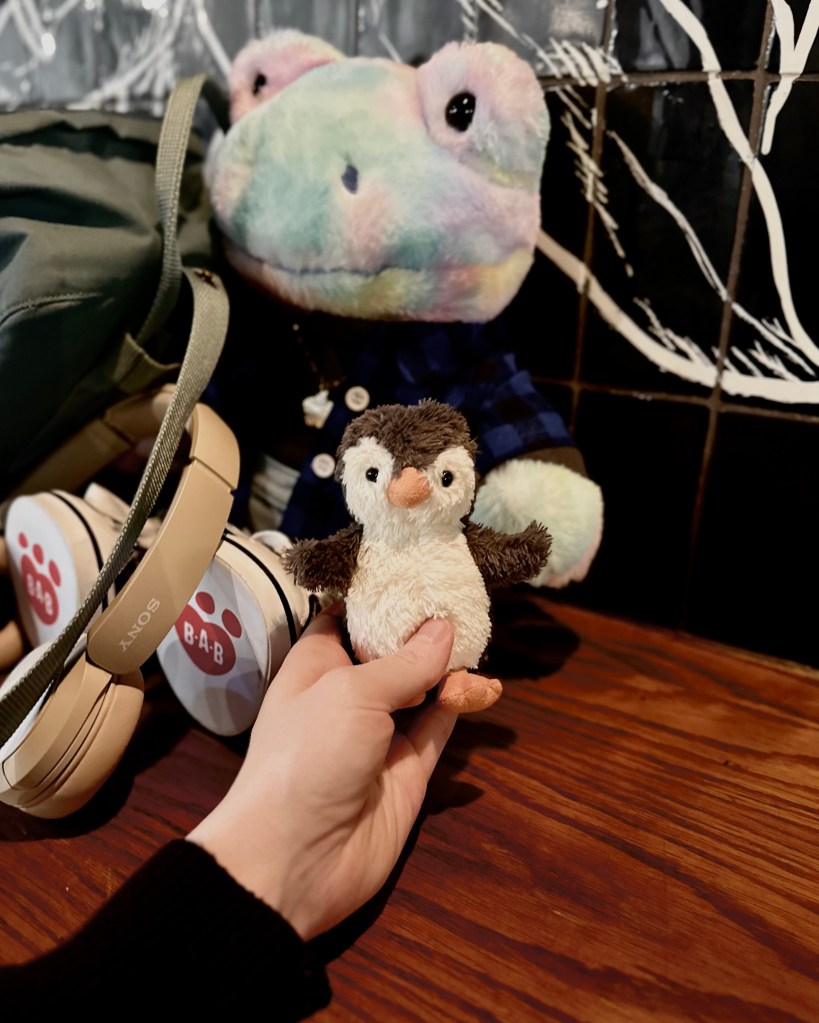
I love the penguin !!
Sent with Proton Mail secure email.
LikeLiked by 1 person
Pingback: My Flat Is Falling Apart But at Least I Have Starbucks – Seren's Bear Blog
Pingback: What I Eat in a Day: The 42 Year Old, High Protein, But No Greek Yoghurt Edition – Seren's Bear Blog