
My appetite’s wrecked, my windows are replaced, but there’s rubble everywhere – and I’ve been trying to clean it up, both literally and metaphorically. Somewhere in all of this, I realised waiting for a good moment to get back on track is a trap. No one with an ED is ever “ready to recover.” You just have to start from wherever you are, even if it’s right in the middle of the rubble.
Everything Still Sucks
I’m still sad about the windows being replaced. I’m missing my pigeon so much – and the stars my new windows took away from me. I’m still panicking about the bed bug infestation in another part of the building, cleaning so obsessively that I’ve injured myself; my hands are cracked and bleeding from cleaning products. I have a scan next week for lymph nodes that have been swollen for months. My mental health, under all this change and never-ending stress, is terrible. All my physical conditions are flaring at once. Last night’s cluster headache attacks were so bad I almost went to hospital. I’m writing this half-ghosted from the pain, wondering how I even survived it.

My ED, I call mine Corrupted Clippy – because it pops up, pretending to be helpful, offering “advice” that only makes everything harder – whispers that I’m not ready. That this isn’t the time to recover. But there is never a perfect time to recover. Life will keep being life. And while my brain clambers for any scrap of control amid all these uncontrollable situations, I’ve finally learned something: not eating, and refusing to gain back the weight I lost from Covid, won’t give me peace.
All I want is peace. Escape. To feel better. And not eating – no matter how persuasively Clippy whispers that it’s the answer – will never give me that.
There is no waiting for life to calm down, or for all of this to go away, so I can finally focus on the real pain I relapsed over – grief for my best friend. Life doesn’t just subtract; it sometimes keeps adding rubble. I’ve included everything I’m dealing with here in this section so you know: you don’t have to wait either. Nothing in life is perfect, and recovery isn’t either.
So instead of waiting, I have to eat while sitting in the sadness, the uncertainty, the anxiety. Because that’s the only way I’ll ever feel like me again – and maybe more able to deal with life not as a series of unfortunate events, but just… life.
Right now, it all feels too much. I wake up anxious and fall asleep anxious, often knocked out mid–panic attack by Quetiapine. I am so low, I’ve lost joy again. I keep trying to find it, only to feel frustrated. I’m standing in both literal and metaphorical rubble, and I have to still crawl my way out somehow.
The Literal Rubble
The workmen who replaced my windows, instead of clearing up the rubble, swept it under my sofa. I left it for a few days, because moving a sofa is risky when you’ve got the joints I have – and when you’ve already worn yourself out cleaning obsessively for bed bugs you don’t even have. Eventually, the rubble became too annoying to ignore, so I moved the sofa, only to find they’d swept far more under there than I thought. Chunks of wall. Mountains of white dust – the kind that makes your anxiety whisper asbestos because you once lived in a flat that actually had it.
My hoover choked on the sheer volume of white powder that would make border patrol instantly detain me in handcuffs – and so did I. But I crawled out of the rubble, cleaned the floor, and my room was back on track.
It made me think a lot about recovery. When I had Covid, and through everything else lately, I’ve swept recovery under the sofa too. It’s easy to. “I don’t have an appetite, so I don’t need to eat.” “My body’s fine here – I don’t have to gain it back.” “As long as I get some calories, it’s not all bad.”
But that’s the recovery rubble – the clutter that builds quietly, the stuff that seems harmless until you realise how much space it’s taken up.
Cleaning the literal rubble made me realise I can’t leave the metaphorical kind to fester either. The literal dust didn’t seem like a big deal until I noticed I’d been traipsing it all over my flat, infecting everything. Recovery’s the same. You don’t see how much it’s spreading until it starts showing up everywhere else.
There’s metaphorical dust all over my brain.
The Realisations in the Metaphorical Rubble
I knew I eventually had to stop ignoring the metaphorical rubble too – to finally move the sofa in my brain where I’d swept all the fragments of recovery underneath. When I did, I saw the mountains of dust they’d created, filtering through everything. And when I looked closer, ready to clean them up, I realised that buried in the dust were two small mountain peaks of clarity.
- I Have Learnt What Rebuild Feels Like
During Covid, I couldn’t eat much. My appetite vanished. I had such bad acid reflux that even drinking water caused bloating, burning, and fullness. If anything’s still too crumbly, I still end up coughing or choking. Because of all this, I lost weight I’d worked so hard to put on, and I told myself, it’s fine, just get by.
So I did. I lived on soup, protein shakes, quark – whatever I could swallow. Those foods have their place when you’re unwell. You should just get by when your stomach can’t even handle water.
But then I got better… But I kept eating like that.
“It doesn’t matter, right? Eat whatever you want whenever you want.”
Except – it does matter. It all does.
After Covid, I started to see it clearly. This recovery has been different. I didn’t go “all in” like last time. That approach just turned Clippy into a cheerleader for chaos – flipping me from “don’t eat anything to feel in control” to “eat everything to feel in control.” (More on that another time – spoiler: I’ve only ever regretted going all in.)
This time, I’ve worked on balance. On re-parenting myself with food. My brain is either a toddler in a sweet shop or a sulking child who doesn’t want to eat at all. It either craves dopamine by any means necessary – like an entire pack of biscuits – or finds every food flat and joyless.
But when I cut out the foods that set off the unmistakable high of a dopamine firework show, I could finally hear my body again. My brain isn’t my body. My brain wants the rollercoaster – highs, crashes, noise. My body just wants calm. It wants stable blood sugar, the calmer mood, the stability balanced eating gives you, not the fireworks of chaos.
And then came the moment of clarity:
My body missed the effort. The fibre, the colour, the balance. It asked me to bring them back – the contentment, the quiet. It really missed my nutrient bomb of a burrito – the real food. This has never happened before. Not once.
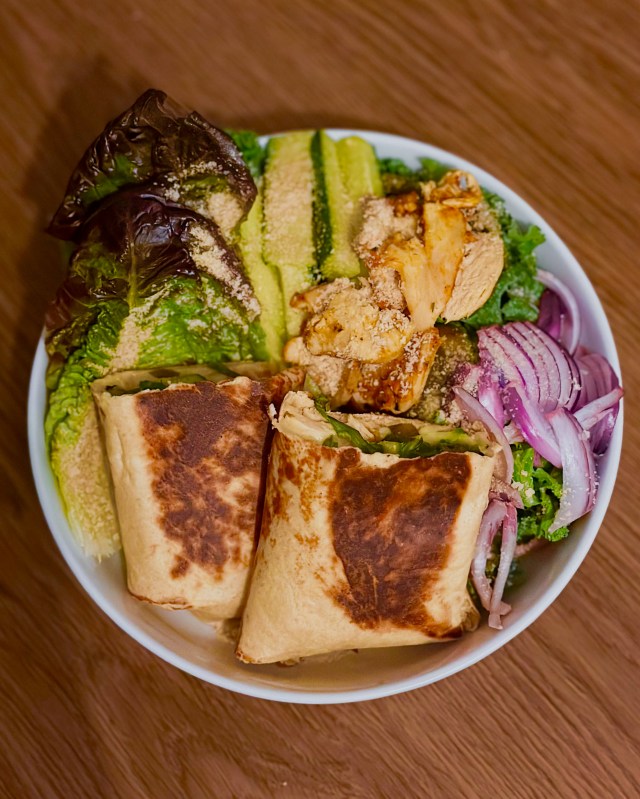
Deep into my last recovery, several years in, I spent months living off Huel because I thought effort was optional. I believed the message that “it doesn’t matter what you eat, as long as you’re eating.” Maybe that’s true in survival mode – Biscoff binges and all – but eventually, you have to rebuild, not just refill.
Now I know what rebuild feels like. Through this recovery, my body has finally been given the chance – by ignoring the ‘eat whatever you want whenever you want’ mantra – to learn what rebuilding actually feels like
And even though Clippy’s screaming not to go back, my body is also screaming at me for kale of all things.
But now that I am feeling a bit better in my recovery from Covid, I can see what I lost wasn’t just weight – it was the foundation and stability my science led recovery has given me.
- The Weight of It All
There’s something else I realised too – because one life-shattering realisation is never enough for me; they tend to come in batches.
In every past relapse, losing weight made me feel lighter and more able – not just physically, but emotionally. My hypermobile joints hurt less, my body felt easier to carry, it didn’t fatigue me as much to do daily tasks, and I mistook that feeling for strength because of how much relief being underweight has always given me.
But this time was different.
Because of how hard I’ve worked to actually build during this recovery, I realised I’ve built a foundation of support for my wonky joints. The weight I’d gained wasn’t just fat; it was function. It was muscle that supported my joints, strength that made daily life easier, and energy that made me feel slightly less incapable – even with hypermobility, chronic fatigue syndrome and everything else still tagging along.
When I lost weight from Covid and eating less, it didn’t make me feel lighter; no relief washed over me. It made me feel weaker. Everything hurt more. My joints screamed. I got a hip injury, an intercostal muscle strain, and costochondritis almost instantly from trying to move around. I felt like I’d lost stability – like I’d become more disabled, not just lighter.
It hit me then: the relief I used to associate with shrinking was never strength. It was just less pressure on a body that had no muscle left to hold it up.
This time, losing weight took something from me I actually need.
The strength to continue.
The Problem with Clarity in Mental Illness
The problem with clarity in mental illness is that it doesn’t last. You’d be forgiven for reading this and thinking, well, there you go – she’s had her realisations, now she just has to eat what she was eating and gain the weight back. I wish it were that simple.
Clarity feels sharp and clean when it arrives. For a moment, everything lines up – I can see my patterns, the ways I use destructive coping mechanisms, understand my body, even feel determined to do the right thing. But mental illness doesn’t care about logic. It changes how you think, how much access you have to that logic, and how long it stays within reach.
Today, I can see this all clearly: I know the effort matters; I know what I need to do. But tomorrow, I might wake up and Clippy will already be there, all googly-eyed and unhelpful –
“It looks like you’re trying to eat food! Would you like help regretting that and then panic about having no control over the numbers on the scale?”
I wish it were as easy as following the realisations. It’s not. Getting back on track – even with this much clarity – will be difficult. I know that. I can already feel the pull of old habits whispering for control, and the exhaustion that makes “try again tomorrow” sound so tempting.
I’m exhausted – emotionally, mentally, physically. I’m really worried about the scan next week, and I’m really sad about everything. Any one of these things would be enough to send me backwards.
But maybe that’s the point.
Maybe the problem with clarity isn’t that it fades – it’s that you have to keep rediscovering it through the rubble, over and over again, until one day it’s finally clean – like my room is – and the relief of the rubble being gone makes pulling the sofa out, despite your injuries, feel worthwhile.
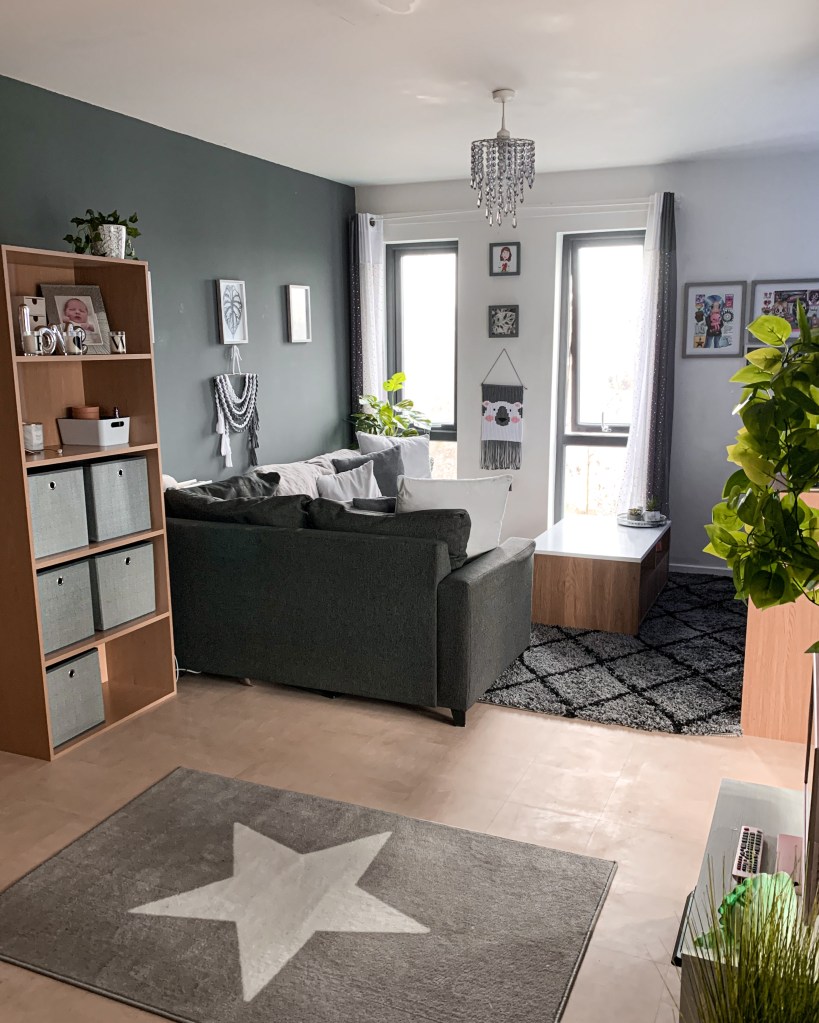
A clean room. A clean brain. A new slate.
So for now, I’ll keep clearing the rubble a little at a time, even if life keeps adding more. Maybe that’s all recovery really is – cleaning as you go, knowing it’ll never stay spotless for long, but doing it anyway.
And it all starts, as silly as it sounds, with making my burrito again.
Because if I can make that, I’m rebuilding, I’m gaining my much needed strength back to get through everything else.
(And I’ll probably need a lot of burritos if I keep using all my energy cleaning up both the literal and metaphorical rubble.)
 Absurd Universe
It was wrong of them to put the rubble under your sofa, instead of sweeping it up.
You will definitely need your burritos for energy cleaning and getting about. I hope you find it easier with that and find other foods tempting to have again.
LikeLiked by 1 person
thanks lovely :3
At least the real rubble they swept gave me a metaphor for the metaphorical rubble I guess.
LikeLiked by 1 person
Hang in there. ❤
LikeLiked by 1 person
Thanks so much ❤ You hang in there too
LikeLike