I have known I was asexual for a very long time. Accepting it, however, has been a completely different story.
When people talk about discovering their identity, it is often presented as a moment of clarity. A sudden revelation where everything finally makes sense and they immediately feel relief. While that certainly happens for some people, my experience was messier than that.
I spent decades trying to find an alternative explanation. Maybe I hadn’t met the right person. Maybe I needed more experience. Maybe I was secretly attracted to women. Maybe it would change one day. Maybe everyone else was right and I was wrong.
This post isn’t really about discovering that I’m asexual. It’s about all the reasons I convinced myself that I couldn’t possibly be.
I’m Just A Teenage Asexual, Baby.
People often think that realising something about yourself comes with a sudden moment of enlightenment. Afterwards, everything makes sense. You look back and think, of course, that’s who I always was. There’s certainty, clarity, and all the missing pieces fall into place.
That isn’t what happened when I discovered I was asexual.
I was a teenager in the 90s. There wasn’t even language for what I was experiencing. We didn’t have Google, and when we eventually did, you had to know the right question before you could find the right answer. If you didn’t know what to ask, there was no answer waiting for you.
Even without the language for it, I knew I was different from my friends.
Teenagers talk about relationships and crushes almost constantly, especially the girls at my school. I was never interested in those conversations and couldn’t understand why they seemed so important. It felt as though it was all anyone cared about: who fancied who, who was dating who, who was sitting next to who in class. I found it baffling.
At the same time, I felt left out because I didn’t see the world the way my peers did.
Eventually, I started spending more time with the boys in my year. They played Quake in the computer lab, which was far more interesting to me than endless discussions about relationships. Of course, this led to people assuming I was doing it for attention or because I fancied one of them.
I never understood that conclusion. I wasn’t there because of the boys. I was there because Quake was fun.
The boys talked about weird websites they’d found, video games, computer programming, and sports. They weren’t constantly discussing relationships, and spending time with them gave me a break from something that was starting to make me feel broken.
My lack of interest didn’t go unnoticed.
People then started questioning what it meant. Was I gay? Was I repressing something? Was there something wrong with me?
All I’ve ever wanted, for much of my life, is to be what everyone else decides is normal.
I’ve spent most of my life feeling not quite normal for a variety of reasons. Being asexual is only one of them. Back then, though, “different” wasn’t viewed as just another variation of normal. It was often treated as evidence that something was fundamentally wrong with you.
By the time I was eighteen, I felt as though I was missing out on some essential part of being a teenager. Everyone else seemed to be experiencing something that I wasn’t.
So I started dating.
You Can’t Know Unless You’ve Tried
One of the things that frustrates me about discussions around asexuality is how often people insist that you can’t know unless you’ve tried.
I’ve never heard anyone tell a straight teenager they need to date someone of the same sex before they’re allowed to know they’re straight. Yet LGBTQIA people are routinely told they can’t know themselves until they’ve had relationships or sex.
I was told that all the time whenever I spoke about how I felt. Maybe I just needed to find the right person. So I tried.
Relationships severely affected my mental health. They felt stressful, full of pressure, and often felt like another form of masking. Not only did I struggle with the romantic and sexual aspects of them, I also seemed to be missing something that everyone else naturally understood. It caused so many problems.
People would play relationship games with me and I’d respond in ways that baffled them. Someone would threaten to break up with me in an attempt to get me to abandon a boundary.
“Okay, leave then.”
Someone would try to make me jealous by telling me about hanging out with another person who supposedly had a crush on them.
“Have fun. Frankly, it’ll be a relief if you date her instead.”
I wasn’t being brave. I wasn’t pretending not to care. I genuinely wasn’t worried. In fact, I often saw it for the game that it was, and I found the constant drama exhausting.
I remember thinking that maybe they’d be happier with someone who enjoyed these games because I certainly didn’t. I liked playing video games. These games just seemed ridiculous, a waste of energy, and seemed like the other person really just wanted to find excuses to be mad for no reason.
Looking back, all of my relationships followed a similar pattern. You could argue that these simply weren’t the right people, and that’s true. They weren’t.
I cared about them. I enjoyed spending time with them. I wanted them in my life. I just didn’t want the other stuff.
However, then the right person did come along. The person everyone told me I needed to find…. And it was exactly the same.
You Just Need to Find the Right Person
I met my son’s dad at work.
I was nineteen, nearly twenty. He was a few years older than me, and we were both unusually young for management positions, so we had a lot in common. I found him incredibly interesting. He was intelligent, passionate about a hundred different things, and we could spend hours talking, texting, everything.
Looking back, I think I often confused admiration with attraction.
When you’ve never experienced sexual or romantic attraction, it’s easy to mistake other feelings for it. I was fascinated by him. I respected him. I loved our conversations and enjoyed being around him. What I didn’t do was fantasise about taking things further. Just being around him felt like enough.
Unlike the people I’d dated before, he never played games. He never tried to make me jealous. He never pressured me into anything. He was communicative, direct, and refreshingly honest. I really liked that about him.
In many ways, he was exactly the sort of person people had spent years telling me I needed to find. The right person.
The problem was that when it came to the physical side of the relationship, I felt exactly the same as I always had. The anxiety was still there. The dread was still there. Even when I willingly consented to something, I often came away feeling as though I hadn’t. Not because I’d been pressured, manipulated, or coerced. I hadn’t. The feeling was coming from me and my mental health would deteoriate because of it.
I kept doing it because I thought that’s what people were supposed to do in relationships. I assumed there was something wrong with me that would eventually click into place if I just kept trying hard enough.
Then, at 20, I found out I was pregnant. He wasn’t ready to be a father and didn’t want to be involved. While I was upset for my son, I accepted that. I felt like I had a choice, and thought it was fair he had one too. We parted ways surprisingly amicably considering the circumstances.
What stands out to me now is that I never pined for him. I cared about him deeply. I thought highly of him. I still think of him fondly today.
I miss him for my son. I miss the father figure my son never had. Sometimes I wonder about the parts of my son that came from him and how easy it is that I love all one hundred percent of someone who is fifty percent him.
But I never sat around wishing I could get him back. I never felt that part of the heartbreak everyone else described. Instead, the whole experience left me with a question.
If even the right person didn’t change anything, then what exactly was going on? What was I trying so hard to become? What was wrong with me? Eventually, I stopped trying to answer those questions.
I gave up on fitting in. Instead for the next several years, I devoted myself to raising my son instead.
For years, I barely thought about relationships at all. I didn’t feel deprived. I didn’t feel lonely. I didn’t feel as though something was missing from my life. If anything, I felt relieved. The pressure to perform normality had gone away.
When my son was asleep, I’d spend my evenings playing video games with friends who treated me as an equal. There were no relationship games, no expectations, no hidden tests. It was so much fun playing CoD, Battlefield, Borderlands 2, Destiny, whatever came along. More importantly, it was enough.
It wasn’t until my son was seven years old, while I was recovering from my eating disorder, that I finally started questioning why I was the way I was and began looking for answers.
Maybe You Just Want a Label to Feel Special
One of the stranger accusations I’ve encountered is the idea that people only identify as asexual, because they want a label to feel special.
I find that frustrating because it bears absolutely no resemblance to my experience. I didn’t stumble across a TikTok, read a sentence, and decide it was my entire personality. In fact, I spent nearly half of my life trying very hard not to be asexual.
I tried to be straight. I tried relationships. I tried convincing myself that I just hadn’t met the right person yet. The only thing any of those attempts achieved was making me feel increasingly broken and severely affected my mental health.
The first time I heard the word asexual was completely by accident. I was describing my experiences in a Facebook group looking for understanding, when someone replied, almost casually:
“Lol, sounds like you’re just asexual. Here’s a link to an asexual forum.”
I don’t think they realised how significant that comment would turn out to be. I clicked the link and disappeared down a rabbit hole.
For hours I read posts, experiences, discussions, and descriptions from people who sounded exactly like me. For the first time in my life, I wasn’t reading something and thinking, I don’t quite fit this. I was reading my own experiences reflected back at me.
By the end of the evening, I had realised something that changed how I viewed myself forever. There wasn’t actually anything wrong with me. I wasn’t broken. I wasn’t failing to be straight correctly. I was simply finding people who experienced the world in the same way that I did.
That’s what labels can do when they’re useful. They don’t make you special. They give you language. They give you context. Sometimes they give you permission to stop fighting yourself.
What surprised me most was that the revelation wasn’t entirely positive. There was relief. An enormous amount of relief. But there was grief too. If this was true, then it explained my past but it also forced me to think about my future.
I realised I probably wasn’t going to get married because I had no desire to. I realised I didn’t actually want the sort of relationship everyone else seemed to be chasing. I realised that my life was probably never going to look particularly traditional. Despite how much sense the label made, part of me still hoped it wasn’t true.
Because it can change, right? That’s what people say! Maybe one day I’d wake up and not be asexual. Maybe one day I’d become the person I’d spent so many years trying to be.
Even after finally finding an explanation, I wasn’t quite ready to let go of that hope.
Sexuality Can Change Though
Well, warning: this part gets embarrassing.
People often like to say that sexuality is fluid and can change. While that may be true for some people, it’s usually been said to me because someone feels sad for me. They incorrectly hope I’ll change my mind one day. They hope I’ll meet the right person. They hope I’ll stop being asexual.
That made it difficult to accept that I might simply be asexual forever, because there always seemed to be this promise of change hanging over my head. Maybe one day I’d not be asexual anymore. Maybe one day I’d want what everyone else wanted.
Personally, I’ve never witnessed someone’s LGBTQIA+ identity completely change. That’s not to say it never happens, only that I haven’t seen it. My son is trans, I never thought or said, “Don’t transition because gender is fluid you might change your mind or not be trans anymore one day”.
My son coming to the conclusion that he is trans, was consistent with everything I know about him from raising him. It’s not going to change, he just is trans. His microlabels might change, but he will always be trans.
For myself, however, it took me a very long time to understand that my asexuality is in fact fixed and always will be.
In fact, this part of my story is surprisingly recent.
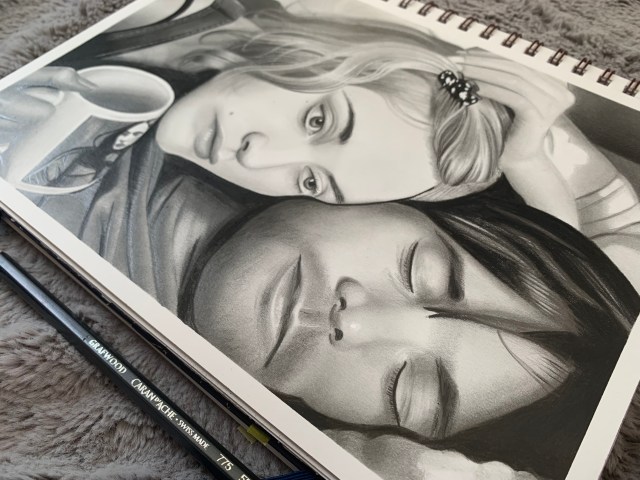
A few years ago, I met a woman I admired enormously. I found her interesting, talented, intelligent, and aesthetically beautiful. As an artist, I often look at people and think, I want to draw them. Not in a Titanic “paint me like one of your French girls” kind of way, but because faces are fascinating and I enjoy studying them.
Around the same time, there seemed to be a surge of women online sharing stories about discovering they were lesbians later in life. A common theme was that they had previously thought they were asexual, only to realise that they weren’t attracted to men and had mistaken that for a lack of attraction altogether.
I had never considered that possibility for myself. So naturally, I started wondering. What if that was me? And if I’m being completely honest, I hoped it was.
Not because I desperately wanted to date women, but because being a lesbian still fit into the life script I had spent years imagining. Partnership. Marriage. Growing old with someone. Companionship.
I have never been particularly interested in getting married. I don’t sit around dreaming about weddings. Yet I still carried around this idea that marriage was one of those major life events you’re supposed to have. Society presents it as a unique marker of life success, happiness, and meaning, even though logically I know it isn’t. You can have a meaningful life without being married.
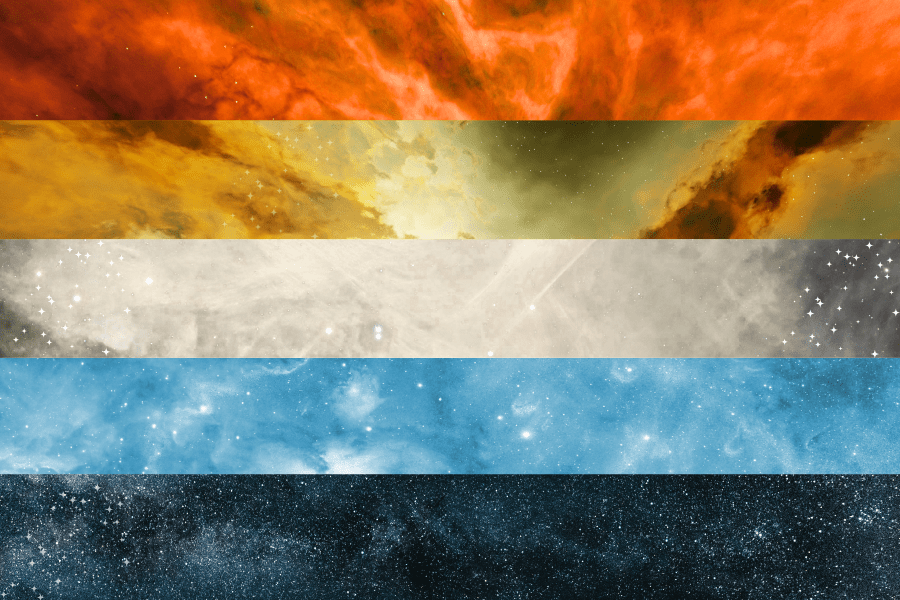
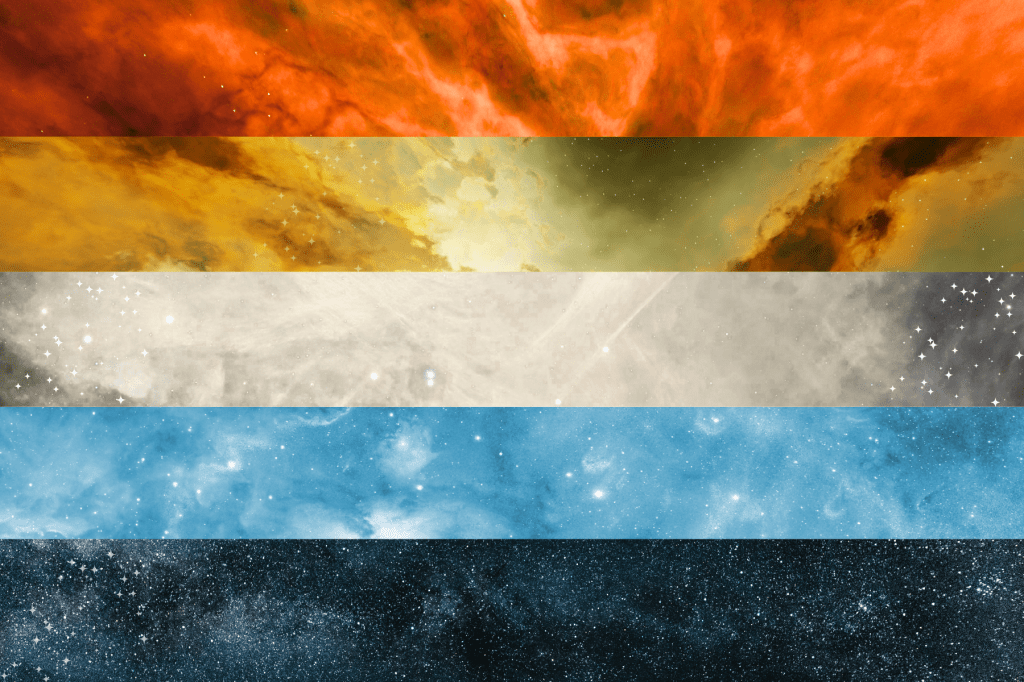
So for a while, I genuinely thought and hoped that I might be a lesbian. I even bought the flags. Unfortunately, I eventually arrived at the rather obvious conclusion that I wasn’t. Because I don’t want to Netflix and chill with women either.
I feel exactly the same way about women as I do men. The fantasies never appeared. The attraction never appeared. I was all Netflix and absolutely no chill. Realising that was harder than I’d like to admit. Because I wanted an explanation that wasn’t asexuality.
I wanted a version of the story that ended with me fitting into the life I had spent decades imagining for myself. A partner. A wedding. A conventional family for my son.
Instead, I found myself right back where I had started. Asexual. Again.
Looking back, I feel embarrassed that I questioned myself yet again. I know I was only doing exactly what everyone had spent years telling me to do. Keep an open mind. Consider other possibilities. Don’t rush to conclusions.
The difference is that every road I explored eventually led back to the same place and being confronted with the fact I’ve struggled to accept anything about myself.
These days, I don’t really question it anymore. It’s been decades since I had anything that resembles a relationship. I’ve also spent long enough trying to be somebody else. I’m an aromantic asexual. Not because I chose the label. Because after years of trying every alternative explanation I could find, it was the one that remained.
Self Acceptance Is Really Difficult For Me
If there’s one thing my entire blog has taught me, it’s that I struggle to accept almost anything about myself. I have struggled to accept my physical health problems. I have struggled to accept my mental health problems. I have struggled to accept being asexual. I have struggled to accept that my best friend died. I have struggled to accept life without her. I have struggled to accept that I am grieving still. I have struggled to accept being exactly the person that I am.
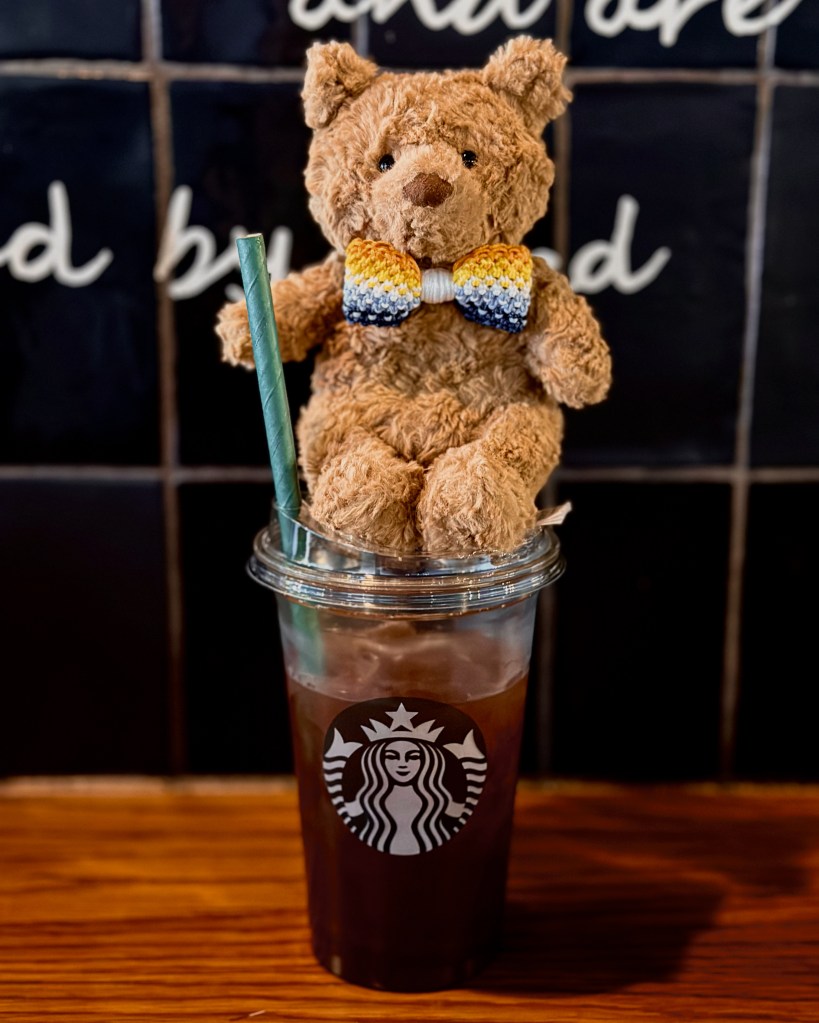
This tendency plays a huge role in my eating disorder. So much of it comes back to the same question:
What if I were different?
I wish this was one of those stories where I discovered I was asexual and immediately felt relief, certainty, and joy. I wish I could tell you that I instantly embraced it. I didn’t.
I see other asexual people experiencing what is often called “ace joy”, and I love that for them. The asexual community has helped me enormously over the years, and I’ve never once thought less of another person for being asexual.
I see people living fulfilling lives. I see people building meaningful relationships. I see people creating lives that make them happy. Logically, I know that not wanting romance, marriage, or sex doesn’t make someone lesser.
I have never believed that about anyone else.
The problem is that I’ve always held myself to a different standard. Self acceptance has never come naturally to me, and I think part of that is because so few people have accepted me for who I am.
My best friend did. My son does. A handful of other friends do. I can count them on one hand.
But not my parents. Not many of the people I’ve known throughout my life. Instead, I was often told that I should change. That I would change. That one day, if I worked hard enough, I would become somebody else. Somebody more worthy.
So perhaps it’s not surprising that I spent so many years hoping they were right. Sometimes, only for them so I’d stop letting everyone down.
But after decades of questioning myself, testing every theory, and searching for alternative explanations, I find myself back where I started. The truth is the truth, whether I accept it or not.
I am asexual. I always was. And maybe accepting that is a way I can find my own Ace Joy and embrace that I always will be.
 Absurd Universe
Thank you for sharing your asexual history with such transparency. Honestly, I think the world would be a better place with more asexuals!
LikeLiked by 1 person