Whenever I’ve increased my calories in recovery, I’ve noticed something happen: I become more me. And recently, it feels like I’ve reached my final form – like I’ve evolved. The eating disorder left me small, quiet, and lifeless, but now I’m bigger, louder, and chaotically alive.
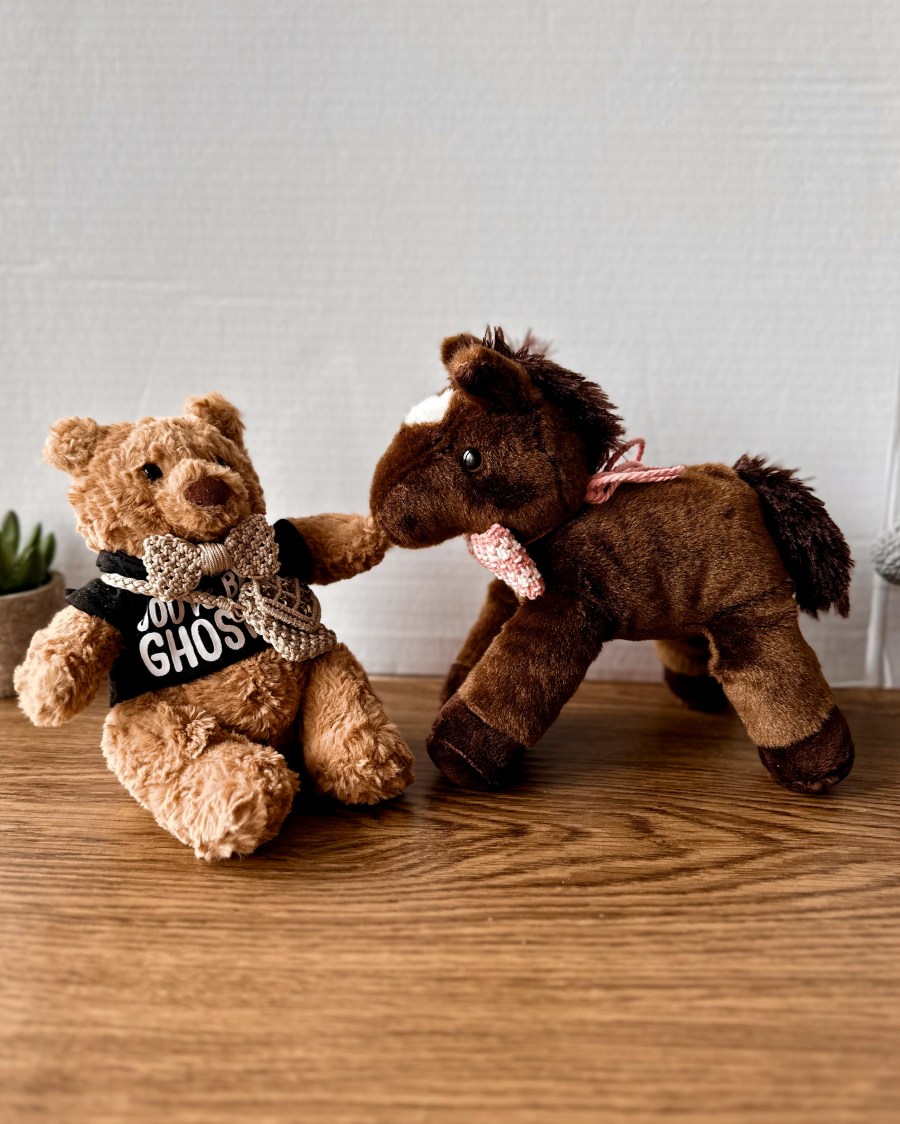
At times, being this new version of me has been hilarious. I tell jokes, I find humour in everything – even in the absurd. But it’s also chaotic and destabilising. Sometimes I struggle to hold the reins of my constantly bucking personality before it escapes my grasp like an unruly horse that despite my coaxing, runs off on its own tangent.
There are other horses too – almost like I’ve been run over by the four horsemen of Clippy’s (my ED’s) apocalypse.
The Rider of the Clippy Horse
Every time I think I’ve finally reined in my eating disorder, Clippy shows up wearing a brand-new disguise. It’s not cutting calories or purposely skipping meals anymore – it’s “productivity,” it’s “earning rest,” it’s “just being disciplined.” Sneaky little corrupted pop-up. I catch myself believing these thoughts are me – that they’re my voice – until I realise I’m drowning in guilt for sitting still.
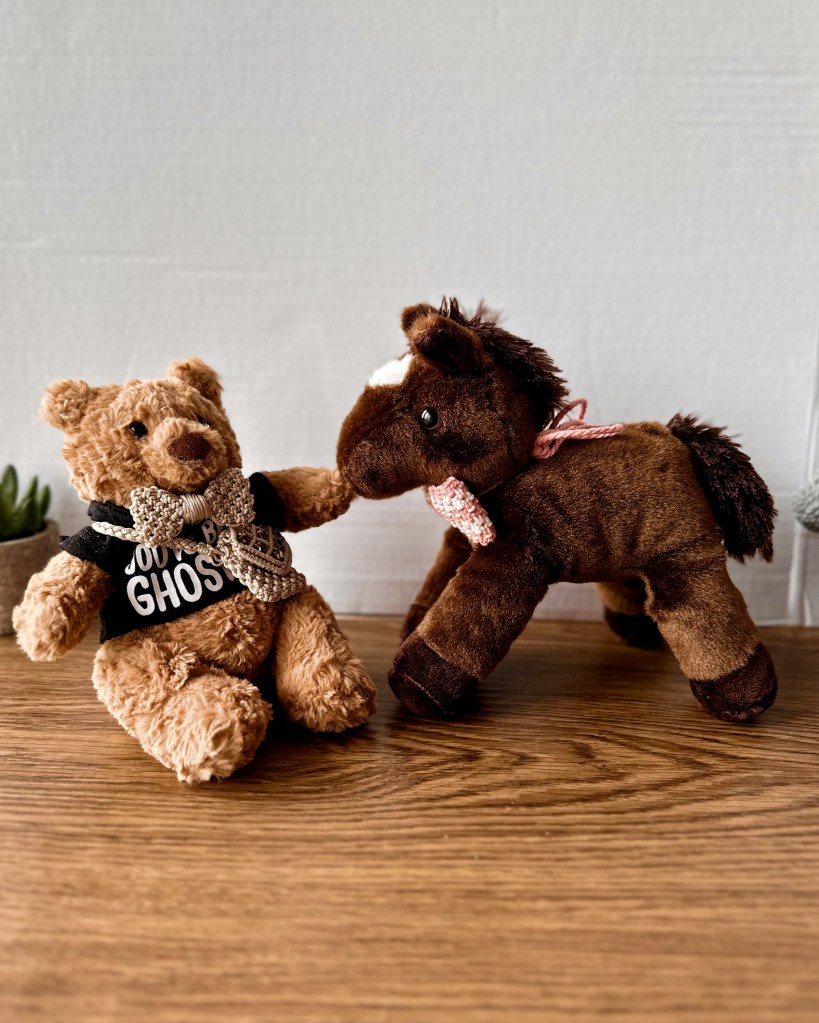
It seems Clippy has its own survival mode, too – desperate for me not to run my recovery anti-virus program and delete its corrupted malware forever. I’ll find myself checking and reacting to my weight too much, or slipping back into Clippy mode and handing the steering wheel of myself entirely over to it. It takes me a minute to realise that’s happened, that I’m acting out of my ED and not myself. After all, I’m eating properly now. It convinces me that because I’m nourishing myself, these thoughts must be mine – but they’re not. They’re just Clippy wearing a new mask.
Sometimes recovery isn’t about fighting the old battles – it’s learning the ways Clippy can still take the steering wheel without me even noticing.
The Rider of the Horse With Chronic Fatigue
I had a quixotic hope that eating more would give me unlimited energy – that once I was fuelled properly, I’d be unstoppable. The reality is far less cinematic. My baseline hasn’t magically reset just because I’m eating more Biscoff. I’m still the same person with chronic fatigue syndrome, only now I’m trying to navigate this louder, more chaotic version of myself inside a body that still hits the wall. And when I hit it, I hit it hard.

Fatigue in recovery is normal. But any extra fatigue on top of a baseline of chronic fatigue syndrome is completely disabling. Recovery makes you think about the person you want to become – and all of my hopes for myself are hemmed in by my conditions, one of them being this relentless exhaustion. It’s exactly why I deluded myself into thinking this recovery would be different, that I’d somehow transform into someone unstoppable.
It’s not because I don’t work hard enough. The truth is that I work too hard, refuse to accept my limits, and push my body to its absolute edge until I crash – into exhaustion, or into an injury that refuses to heal because I still won’t stop. Sometimes everything flares at once and I end up in a complete mess. I wish I could push through it, and sometimes I trick myself into believing I can, because accepting that this is never going to go away – that my life is always going to be shaped by this – feels unbearable.
I’ve spent years trying to outrun it: push harder, eat less, do more, pretend I wasn’t disabled. But none of that ever worked. All it ever did was break me further – it’s the same pattern I’ve been trapped in since chronic fatigue first reared its ugly head.
So maybe recovery isn’t about erasing my limits. Maybe it’s about respecting them. Maybe it’s about understanding that this is the body I have, and that the kindest, bravest thing I can do is learn how to care for it.
Slowing down isn’t giving up. I’ll keep doing the things that genuinely help – the fish oil, the creatine, the higher protein, the nutrients, the small walks when I can. Those things make my days better, even if they don’t make them easy. But if I keep reaching for “cured,” I’ll spend the rest of my life failing. I’ve pushed myself past every limit I have trying to fix the unfixable, and all it’s done is drain the energy I needed to actually be myself.
So maybe recovery isn’t about erasing the illness. Maybe it’s about learning to live alongside it – about giving my body the time it needs, and accepting that needing more time isn’t weakness. It’s recognising reality. And in that reality, I am disabled. That won’t change. But I can choose to stop punishing myself for it. I can choose to rest, to slow down, to live a life that’s sustainable rather than a life that’s a constant attempt to be someone I’m not.
Maybe that’s the real work of recovery: not chasing the version of me who doesn’t exist, but finally making space for the version who’s here right now.
The Rider of the Horse With Cluster Headaches
Every time I run myself ragged trying to prove I’m productive and deserving of food, or trying to outrun my fear of accepting my chronic fatigue syndrome, my cluster headaches come charging in like, “Oh, you thought you could do everything now? Think again.” They don’t care how motivated I am – they stop me in my tracks and remind me that pain sets its own limits.
Activity is a massive trigger for attacks during an episode, and I’m currently right in the middle of one. Running myself absolutely ragged has led to a chronic fatigue flare and worsening cluster headaches, which makes any restorative sleep almost impossible when I’m woken up every few hours by the worst pain I’ve ever felt in my life.
I’m in a right mess with them. Usually, during an episode, I know how to protect myself – I slow down, only do chores when I have to, wait for the storm to pass, and try to make up for lost sleep with naps. But now I’m seeing naps as a failure because I haven’t done “enough.” I’m too busy trying to prove to myself that I can still keep up with everything despite exhaustion – when the truth is, I can’t.
Cluster headaches don’t negotiate. They don’t care about goals, plans, or my pride – they remind me that my body isn’t something I control, it’s something I have to collaborate with. And the pain isn’t just pain. It’s obliteration. Every time an attack hits, I wonder how a human being can experience something so violent and still be alive afterward. It feels as though my body expected me to die from it – and when I don’t, I walk around between attacks like a ghost who somehow slipped through the door that should have closed.
That’s the part people don’t see. The depression that creeps in after every attack. The way everything starts to feel pointless because it will all be interrupted again – by that stabbing, searing, world-ending pain. It strips life of its texture, and even when the pain stops, I don’t feel present anymore. I feel like I’m haunting my own life, waiting for the next strike.
This cluster episode has taught me that my attempts to outrun myself have consequences. The harder I push, the more vicious the clusters become. They remind me that I’m not invincible – that if I don’t slow down willingly, my body will slam on the brakes for me. Maybe that’s the lesson here: I can either choose to rest, or I can be forced to. Either way, rest is coming. It’s up to me whether it’s gentle or brutal – and whether I want to keep haunting my life, or finally learn how to live inside it.
The Fourth Rider is Me
Then there’s me – riding the most confusing horse of all. I don’t always know where I begin and where the others end. Which parts are new ED behaviours? Which are my depression’s response to the chaos? Which are side effects of the cluster headaches? And which are simply me, trying to figure out how to exist again? I’m pulling hard on the reins, but this horse is still bolting in every direction – bucking, skidding, refusing to settle, no matter how many times I shout “EASY!” at the top of my lungs.
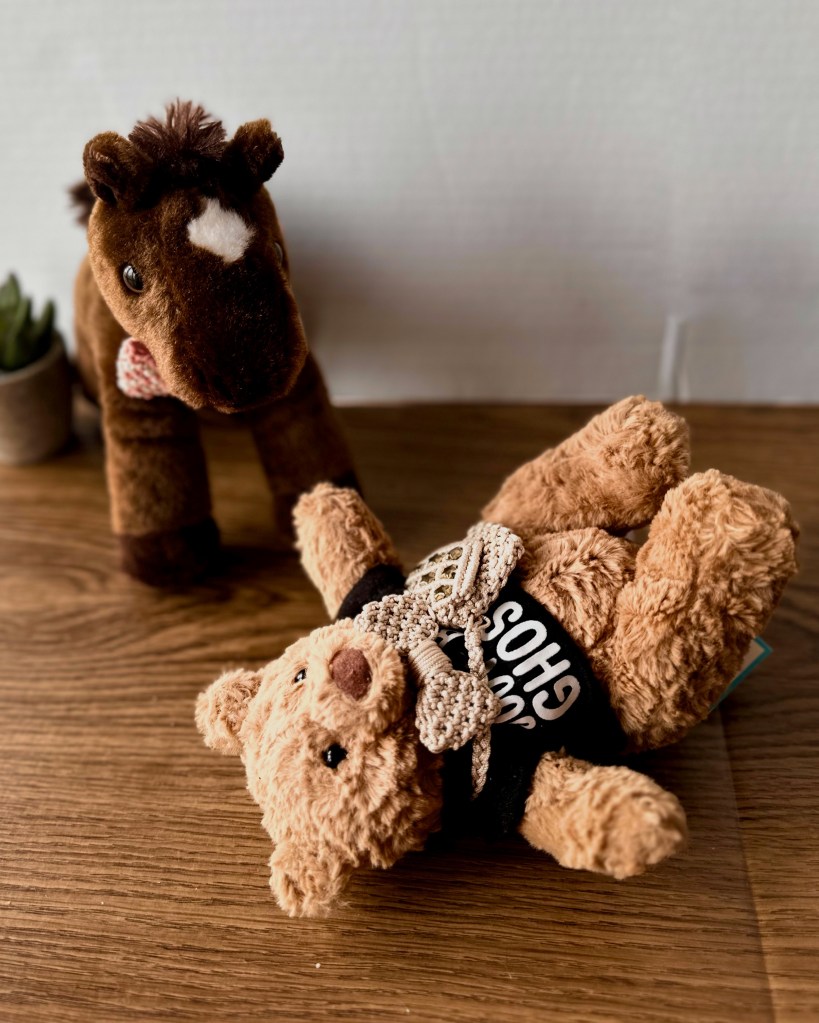
Of course my horse doesn’t respond to “EASY.” Everything is hard. I’ve had to face a new reflection in the mirror – first physically, and now with my personality. I’ve become a new person, and it’s disorienting. There was no dramatic epiphany, no cinematic moment in the wilderness where I suddenly “found myself.” I just started being different.
I catch myself making jokes again – the kind I used to. I go off on long rants about the state of the world. I find myself looking outward instead of only ever looking inward. I’ve started living in line with that Stephen Hawking quote I’ve always loved: “Remember to look up at the stars and not down at your feet.”
But it’s difficult, too. I’m still depressed, still exhausted, still in a cluster headache episode. It’s caused a full-blown identity crisis at times. Do I have anhedonia, or do I just not enjoy gaming anymore? Why don’t my old hobbies do the thing – that spark that makes me feel alive and connected? Why do they feel like chores now, just more activities I’m too exhausted to do?
Writing and blogging remain the one thing that still feels like me. I really tried to post on Monday, Wednesday, and Friday last week, but I couldn’t even think or type. I was too exhausted to be myself. I get to the end of the day after trying to outrun everything and realise I haven’t had the energy to engage with anything remotely “me.” Even turning on my Xbox feels like too much – not because I don’t want to, but because the thought of facing a Cyberpunk update (and Welsh internet) feels like a mountain I can’t climb.
And then there’s the urge to hide this new version of me. Because when I have revealed her, it hasn’t gone down well. Can anyone blame me for wanting to shrink when people seemed to prefer me when I was starving? But I can’t shrink now – so I flutter around, trying to figure out how to make myself smaller, how to make everyone else comfortable, without doing it without skipping food. My brain, ever the problem-solver, offers up harmful alternatives: “Well, we can’t stop eating. How about we eat all the food instead?” Bingeing can happen in recovery, despite what the internet says. Great job, brain – swap one toxic coping mechanism for another.
I know I have to sit in stillness – to stop running, stop chasing, stop trying to outpace myself. But whenever I try, it feels like my whole life is falling apart. Everything around me starts to crumble, and I’m forced to look directly at everything I’ve lost, everything I thought I’d be, and everything I actually am. And I don’t know how to sit with that – because I’m so afraid of what will happen if I do. I feel like I’ll fall deeper into the black hole I carry inside me and never escape.
So I do anything else instead. I keep moving, keep pushing, keep distracting myself – until I run myself into pain, into headaches, into a crushing fatigue so heavy that stillness is no longer a choice. My body slams on the brakes, waving a white flag, begging me to stop.
And even then – even exhausted and broken and aching – I still can’t seem to be still. Maybe stillness isn’t the absence of movement – maybe it’s the moment I face my fears and stop running from myself.
Only Fools and Horses.
I used to think these horses were just wild and needed taming – that if I could break them in, rein them tight, and force them to heel, I’d finally be free. But the truth is, they’re all part of me. The eating disorder that still tries to take the steering wheel, the fatigue that slams me into walls, the cluster headaches that bring me to my knees, and even the confused, chaotic, ever-changing “me” who’s just trying to hold on – they’re not separate riders. They’re the same rider on different horses, all moving in their own unpredictable ways, like particles in the double-slit experiment: you can observe their motion, but you’ll never truly know where they’ll land.
And maybe recovery isn’t about breaking them at all. Maybe it’s about learning how to ride alongside them – how to stop fighting the parts of myself that exist and start learning how to live with them. Some days I’ll lead. Some days I’ll just hold on. Some days all I can do is stop the horses from running me into the ground. But I’m still here, still holding the reins, still trying.
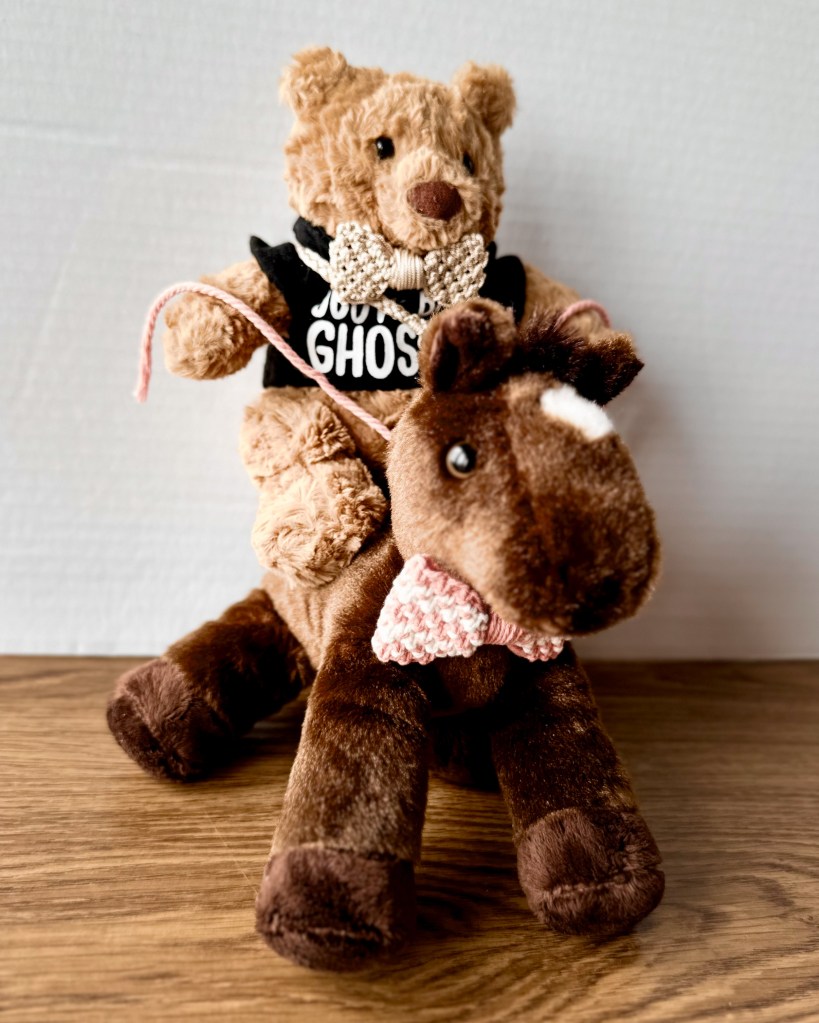
Maybe the work isn’t to silence the chaos or outrun the pain – maybe it’s simply to stay in the saddle. To keep showing up for this strange, difficult, beautiful life, even when the horses refuse to be tamed. And maybe, sometimes, it’s about taking a nap on one of my horses – because the truth is, there are no four horsemen, just me trying to ride all four horses at once. Trying to ride them all will always be exhausting – even jockeys need rest days. And anyone who thinks the horse is doing all the work has never tried staying in the saddle.
Wires and Chains
Maybe I don’t need to explain it perfectly after all. A song from Cyberpunk: Phantom Liberty captures the exhaustion and the truth of it – the futility of looking away, and the impossibility of escape.
Wires and chains
(I’m just tired of lookin’ the other way)
Starting to fade
(I’m just tired of lookin’ the other way)
It feels like a game
(I’m just tired of lookin’ the other way)
You have to play
(I’m just tired of lookin’ the other way)
Who are you now?
 Absurd Universe
‘And in that reality, I am disabled.’ That sentence and your whole post spoke to me. It is so beautifully written despite your internal struggle. You elucidate the unpredictability and chaos that surrounds mental ill health with such skill. It struck me that most mental health diagnoses are a wavy line. My psychiatrist feels that my main issues are anxiety and depression but OCD was the primary diagnosis. At times, my eating is disordered, and I compulsively eat too much or too little.
‘Staying on the saddle’ is something I aim for. When I worked with clients with schizophrenia and bipolar disorder, many years ago, I could empathize with many aspects of our disability. Curiously, I feel that I am more mentally healthy when I am thinner (and I have been obese) and my personality becomes more extroverted. I am not sure I am more mentally healthy when thin but I perceive that. I always felt that the effort that people with a mental illness put in to just feel okay was Herculean.
Brava for keeping up your blogging and writing.
LikeLiked by 1 person
Thank you so much for your amazing and thoughtful comment. It does feel like a Herculean task, which is difficult when you struggle with fatigue. It’s really hard to keep on top of all these horses. Thanks, I tried to post three times last week, but I’ve only been managing about twice, but I keep telling myself it’s better than nothing. Much love to you.
LikeLiked by 1 person
The fatigue is relentless. Keep on that saddle! K x
LikeLiked by 1 person
Pingback: Collecting Psychiatrists Like Pokémon – and Arriving in Panic Station. – Seren's Bear Blog
I’m in recovery as well, and have a lot of medical complications from decades of restricting. It is exhausting. Pain makes that so much worse. Blogging is also something I find helpful- I’m recently sans therapist when I figured out that mine was breadcrumbing me- and blogging about that has been helpful, and I hope finds the people who need to be warned about that kind of thing. I’m glad I found your blog !
LikeLike