Disclaimer:- This post discusses body image, eating disorder recovery, and includes references to weight gain, trauma, body changes, and muscle growth. It may be difficult to read if you’re currently struggling with body image, muscle dysmorphia, or disordered eating thoughts.
I share my experience not as advice, but as one person trying to make sense of what recovery looks like in a body that doesn’t feel like mine yet.
If you’re not in a place to read about these topics today, I totally understand – take care of yourself first.
This post includes a few images of my body in clothing (shorts, etc.) that show visible muscle changes. Please skip if that’s not safe or helpful for you right now. No hard feelings.
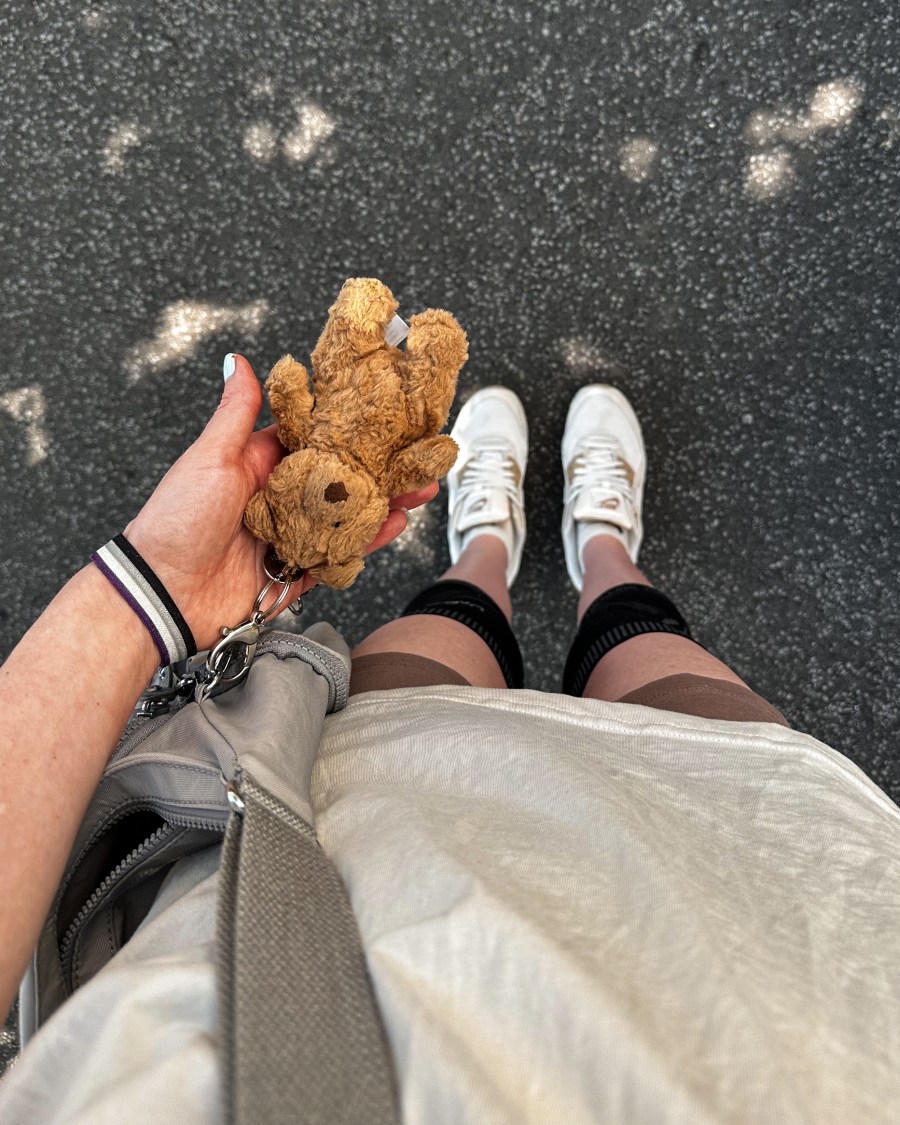
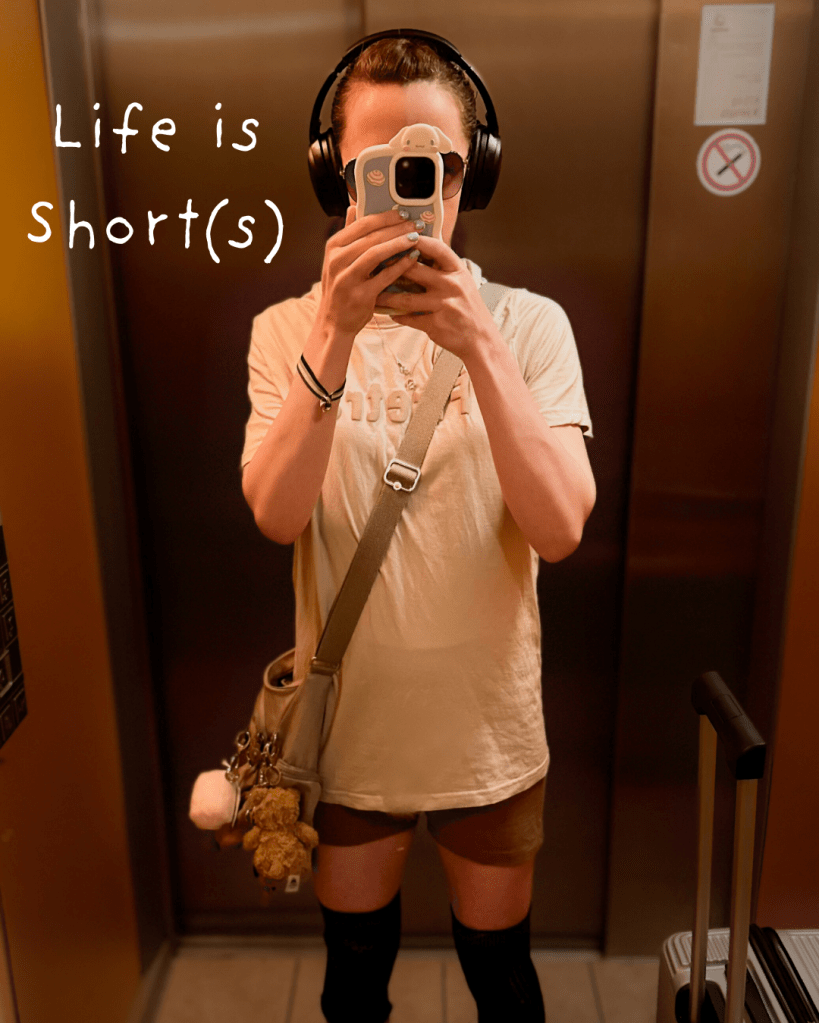
I wore shorts outside today for the first time in over 20 years.
That sentence feels ridiculous. But it’s absolutely true. And it got me thinking about body image – about strength, muscles, visibility, dysmorphia, survival. And mostly, about the fact that:
I’ve gained a LOT of muscle in recovery. And it brought up so many feelings.

This is not a fitness transformation post. I haven’t ever set foot in a gym.
This is a “what the hell is happening to my body, and why does it build muscle the way it does, and why do I feel this way about it?” post – about having a “gains muscle fast and abs despite never doing sit-ups” body type and how that makes me feel in terms of my recovery, my identity, and my “womanhood”.
Part One: Why I Hate My Muscles
My Mother Was My First Bully
When I was a teenager, my mother used to laugh A LOT at my body. It was a daily occurence. Commenting on my body was something she continued for the rest of my life – until I went no contact. The first thing she said to me, every time she saw me, was ALWAYS a negative comment about how I looked. She even started doing this to my son.
I told her to stop MANY times – especially with my son – but trying to maintain a boundary with a narcissist is a fruitless exercise. Reminds me of that joke:
“Why did the narcissist cross the road? They thought it was a boundary.”
One memory I think about a lot: we were on a family holiday, and I was trying to enjoy the beach. I wore a bikini under my t-shirt and shorts because I loved swimming in the sea. I didn’t take them off until I was about to swim – even though it was 40°C in Spain – because I felt exposed.
The moment I did, she laughed at me. Pointed. Said I looked like “a boy in a bikini.” My teenage body growing muscle instead of curves was a joke to her. I was a joke to her.
Later, my dad developed candid photos from that trip. She laughed for five minutes straight at one where I’d just come out of the sea. She said I looked even “worse,” and showed it to relatives and friends, laughing at her teenage daughter’s body in a bikini.
I can’t believe she thought that was ever okay. I felt violated.
There were even worse comments – some I won’t repeat, some transphobic, all cruel – but the underlying message was always the same:
“You’re not really a woman. You’re just pretending to be one, and badly.”
I wasn’t doing anything but existing in my body, trying to enjoy a holiday she always made difficult because her abuse never took a holiday. Puberty didn’t give me curves. It gave me muscle. That’s my genetics – I was born that way. And I was punished for it, not just at home, but at school too.
When you grow up with a mother who comments on your body and everyone else’s all the time, you start thinking that’s just what people are like. You think you’re the weird one for not wanting to do that. You walk into every room expecting a running commentary:
“Gained weight.”
“Looks ill.”
“Too much muscle.”
“Too flat.”
“Too round.”
You imagine everyone is sizing you up, noticing every tiny change. The outside feels exposing – like you’re walking around in a bikini again but this time in the middle of the city. And it feels dangerous. I always felt like I had to hide myself for safety.
I was actually shocked when I got older and realised most people aren’t like that – or at least, no one worth knowing is. People who make judging others’ appearances their personality? Red flags. Boring. Dehumanising. Mean.
But I was wired for it. I was wired to expect everyone to notice everything my body does. It’s something I have to actively remind myself isn’t true.
That’s why the shorts are so difficult. I thought everyone would point and laugh at my thick, muscular thighs. Because that’s what growing up with my mother was actually like.
Part Two: Societal and Cultural Messaging
Then came the body positivity movement of the 2000s – the “real women have curves” era.
So where does that leave me?
The woman who never had curves. The woman who didn’t even get curves when she was pregnant.
Not “real”? Not allowed?
How many times did I internalise the idea that I wasn’t woman enough because I didn’t look soft?
“Body positivity” is the biggest lie on the internet because:
– Cancer survivors are still women
– Trans women are women
– Women with muscles are women
And “real women have curves” is transphobic, misogynistic, and ableist all at once.
It may not be the early 2000s anymore, but we are still living in a society where women can’t be muscular or bulky without punishment.
Look at JK Rowling misgendering a female boxer online – purely because she had muscles. As if women with broad shoulders stop qualifying as women. She claims to be “saving women,” but she’s made women like me feel less safe in society, and in our own bodies.
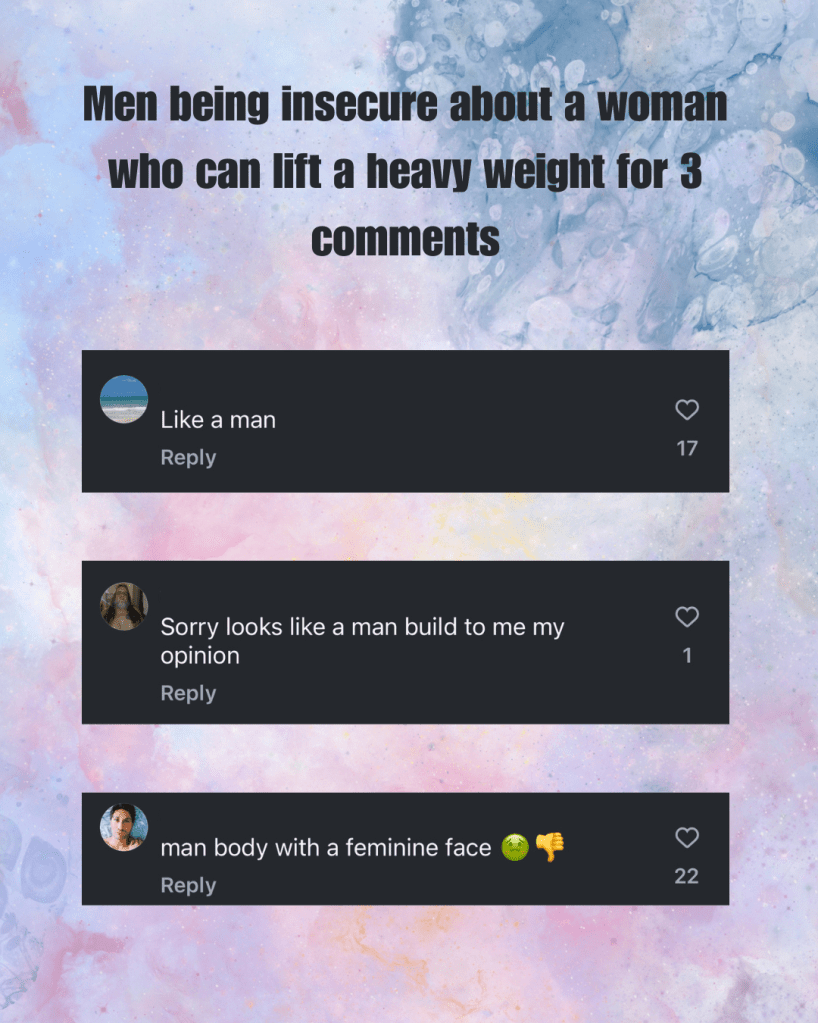
Instagram comments are full of men calling visibly feminine women “man” for the crime of lifting heavy.
And the fitness spaces that should feel safe? They’re full of caveats:
You can bulk, but only if you stay shredded. You can be strong, but not too strong. You can gain, but only if your body fat never passes that socially acceptable threshold.
Don’t even get me started on Pilates Princess social media – where “bulk” is treated like the ultimate feminine failure. Where it’s all about lifting light, “toning,” and staying as slim as possible.
“How to stay skinny while lifting weights” is a popular one. You can’t, by the way – not without restriction, cardio, or genetics that make you incapable of building muscle anyway.
Need I go into the amount of men I’ve dated who suggested I get surgery to fit their ideal.
So between trauma and society, here’s the message I got:
“Muscles = wrong.”
“Muscles = Not a woman.”
“Muscles = Everyone will point and laugh.”
Part Three: What That Did to My Identity
I’m not trans. My son is, and I’m so glad I don’t experience the dysphoria he struggles with. What I’m about to say isn’t a comparison – it isn’t the same. I completely identify with my birth sex.
But I’ve never truly identified with the word “woman,” because for most of my life, I was told I didn’t qualify – just for having the body type I have.
I actually prefer the word female for myself, because “woman” has felt like a role I was never allowed to play. It’s not gender dysphoria – it’s a disconnect from the category I was supposed to belong to.
And when I look strong? That disconnect only feels wider.
Now that I’m in recovery, my body is getting visibly stronger – fast. It’s building muscle like it’s been waiting for permission. And I feel further from “womanhood” than ever.
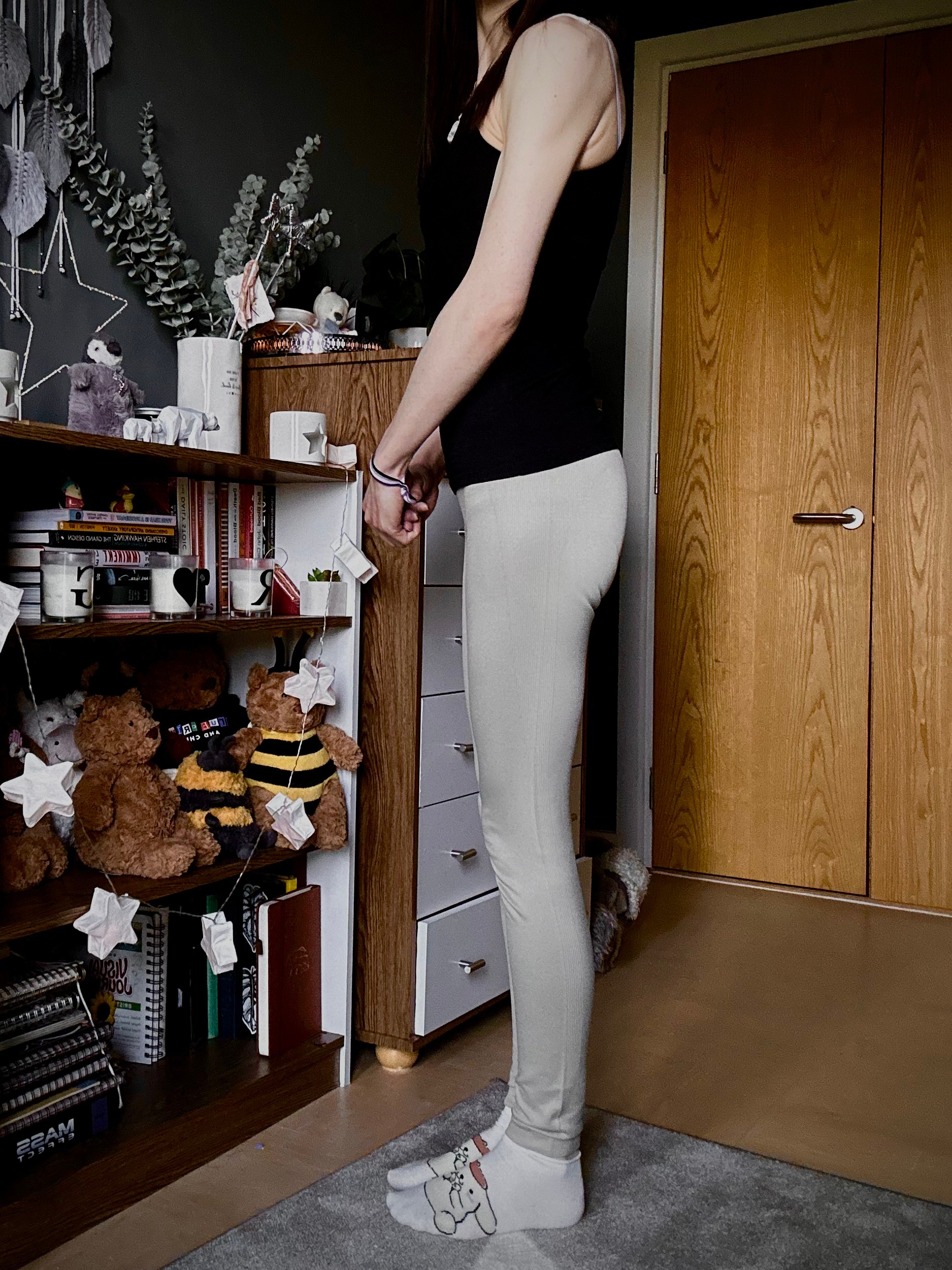
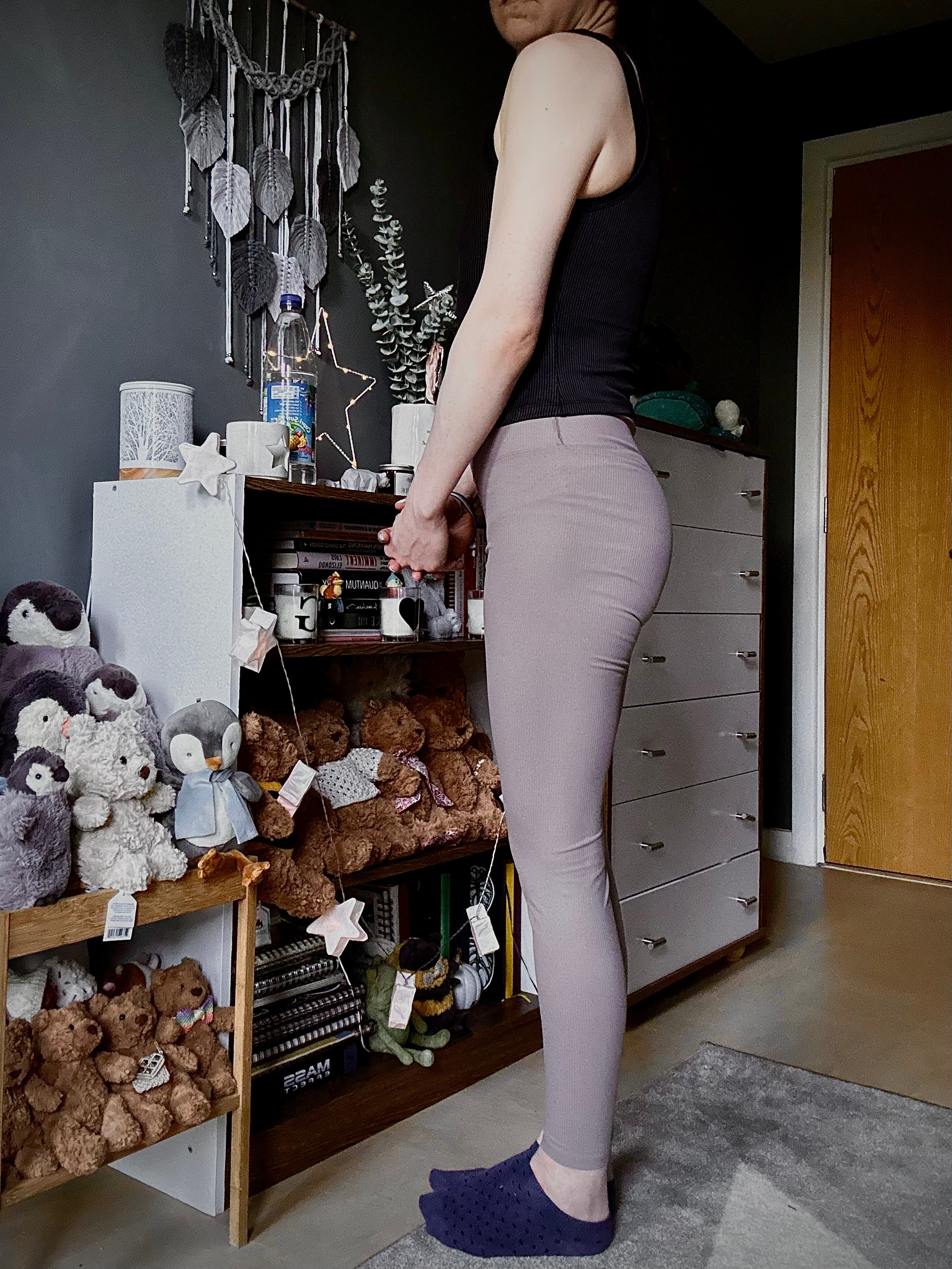
When I was underweight from anorexia, my muscles wasted. I looked spindly, delicate – and my disordered brain liked that. I knew I looked ill, but at least the lack of curves “made sense.”
Now that I’ve gained muscle and no curves, I see the dysmorphia more clearly. It zooms in on my shoulders, makes me think I look like a Welsh rugby player. It distorts my thighs. It makes everything feel bigger, wrong, harder. I look stocky – even though I know I’m not.
Anorexia, for me, has also been a way to express what I feel inside. I don’t feel strong. I don’t feel capable. But now I look it – new glutes, thighs, biceps – and that mismatch makes me want to disappear.
Because I don’t feel like I belong anywhere.
I never belonged in my own family.
Not in society.
Not in my own body.
Part Four: The Numbers and the Weight of Strength
Muscle is denser than fat. The same volume weighs more – so as my body has built muscle, the number on the scale has shot up. And I hate it more than I can even explain.
I hate it more than I hate my thighs. More than I hate my arms. More than I hate my stocky shoulders. More than anything else in this post.
(Except, of course, my hatred for highly derivative children’s book authors who think they can speak on endocrinology without a single scientific qualification – that hatred knows no bounds).
The numbers make it feel like I’ve done something wrong. Like I’m failing again, just in the other direction. Even though it makes no logical sense.
You can gain muscle at maintenance. You don’t need a big surplus. And when I do add a surplus, my thighs seem to grow new thighs overnight. It’s been dramatic – I’ve got the photos to prove it’s not all in my head.
I also know that gaining muscle hopefully means I’m gaining function, not just mass.
But that doesn’t make it any easier when I see my new, 3D reflection. If it were that easy, anorexia wouldn’t exist. No one wants to care this much about numbers. It’s not a choice. It’s the illness.
I’m still deeply fixated on numbers, calories, scale weight. It gets obsessive. I’ve cried over it so many times. It makes me feel broken – like I’ve lost control of myself. Like I’m behind my own body, mentally still in the place I started, even while physically it charges ahead into healing.
Part Five: My Actual Values
Here’s what’s also true: I don’t believe in any of the hatred I feel about myself.
I don’t agree with society’s messages. Or my mother’s. And I never have.
I’ve ranted about JK Rowling and the shallowness of the “body positivity” movement so many times. I’ve defended others from my mother’s one-sided, endless tirades about their bodies. I’ve always stood up for other people’s right to exist exactly as they are. I’ve never judged someone for their body.
I don’t think muscle is unfeminine. I don’t think it makes someone “look like a man”. I think it’s hot. I think women who could drag you out of a burning building are everything. They are proof of what the female body is capable of.
They’re not threatening femininity – they’re expanding it.
The women on Gladiators were everything I wanted to be, growing up – and still are now. Powerful. Fast. Beautiful. They’ve done more for body positivity than the entire internet combined.

I also know that strength doesn’t erase softness. Or femininity. You can be jacked and gentle. Some of the softest women I’ve ever met were jacked security guards. I admired them. I wanted to be like them.
And I wanted to be okay with looking like them – because that’s the body I’ve always had, hidden under decades of restriction, purging and self-hatred.
Part Six: No, This Isn’t About You, Susan
Let me say this loud and clear:
My dysmorphia and mental illness is not a judgement of your body. It’s an attack on mine. When I say I hate how I look, I’m not saying you look bad. I’m not saying muscular women aren’t feminine. I’m not saying anything about you at all.
I’m saying: I’m ill.
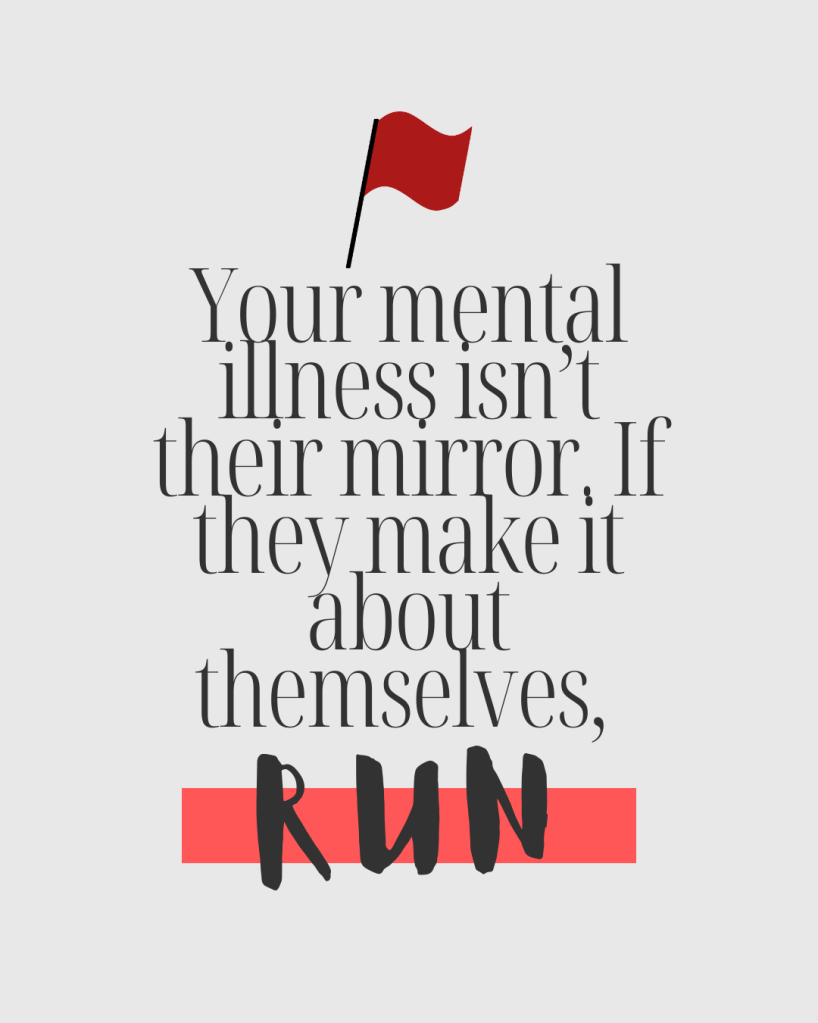
Sometimes, that illness makes me hate myself in ways that go directly against my values. That doesn’t make me a hypocrite – it makes me someone who’s suffering.
I know it’s trauma, too. Because when I look in the mirror, I don’t hear me. I hear her. I hear every vile comment my mother ever made. Every time she laughed. Every time she made the body she gave birth to into a punchline.
It drives me mad how people with EDs and trauma are now not allowed to talk about their own body without someone making it about them. It’s NOT about YOU.
The only person I judge is the one I live inside. The body I see when I tie my shoes. The body I don’t always feel safe inside.
Part Six: Mental Illness ≠ Broken Values
You know you’re mentally unwell when you start believing things that go against your own values.
For example: I have a strong value around not wasting food. I go to great lengths to avoid wasting food. But I also have OCD and food safety anxiety. So sometimes, if the temperature’s off or the flavour is slightly weird, I become convinced it’s poisoned and can’t finish it because I truly believe it will be how my life ends. I throw it away.
That’s not me being careless. That’s not me acting in line with my values. That’s not a judgement I’m making. That’s me being ill.
Every time I compulsively wash my hands, I’m not making any kind of judgement about people who do not do that. I’m just trying to make ME feel safe.
My son, he doesn’t have dysphoria because he hates women.
Same with hating my body, even when I know better. It’s not hypocrisy. It’s suffering.
And when people respond with “wow, that’s fatphobic of you,” or other such false snap judgements of my character – they’re not actually holding me accountable. They’re reducing my mental illness to a belief system I can just choose to change. But trauma doesn’t work like that. Eating disorders don’t work like that. Recovery doesn’t work like that.
I can’t wake up tomorrow and not hear my mother in my head.
Healing isn’t turning the voice off. I don’t think that’s even possible.
Healing is actually learning not to react to it.
Part Seven: What I’m Doing in Recovery Anyway
So this is me, healing – and trying not to react to it.
I’m still eating high protein. Because I know the body I actually have. I eat 120–140g a day. Even though I’ve hated the muscle it built, I’ve fed them every single day.
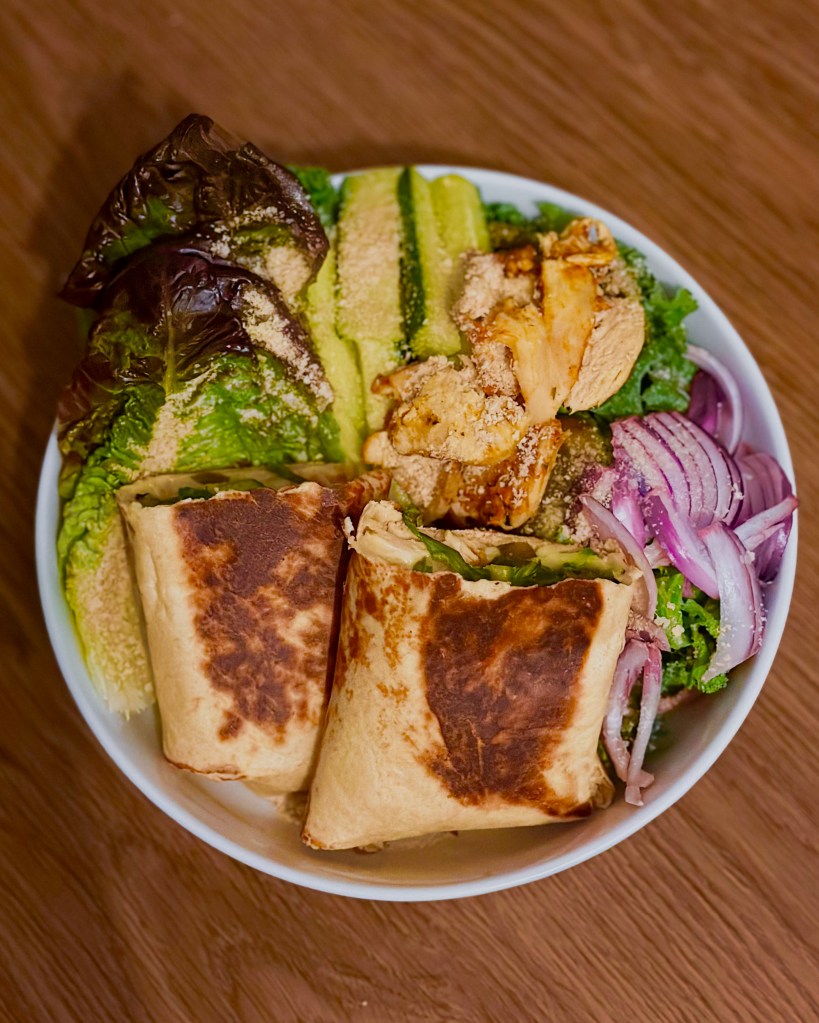
I started wondering what would happen if I ate for my body type. And this is the only way I’ll find out.
I also very recently started taking creatine – slowly, gently (Ill definitely update you all on that). There are so many benefits, especially for women over 40, especially with joint issues, chronic fatigue, and even mental health. It builds muscle, yes. But I’m willing to accept that side effect to gain everything else it might help with.
I’m literally causing the thing I hate – because my values and my instincts need to be louder than the voice I hear every time I look in the mirror.
And that’s kind of amazing.
Kind of funny.
And honestly, totally on brand for my type of recovery:
Hate it, but do it anyway.
“I’m crying about lean mass weight gain while building visible muscle mass with a scoop of creatine.”
I keep telling myself – I’m over 40. I have joint issues. I need strength more than I need aesthetics. Lean mass will hopefully give me that.
Last time I recovered, I gained mostly fat. It preserved my delicate look and I preferred it and it meant I didn’t do any of this work on my body image. But it absolutely ruined my mobility. This time, I want to move. I want to do things. I want to be capable.
So I’m doing what I wish someone had told me to do the first time. Eating high protein. Taking creatine. Ignoring the NHS’s tragic protein guidelines. Reading the medical journal papers. Listening to people who’ve actually done this and tested it.
Even if I look “wrong” to my own eyes while doing it.
So yes, I’m muscular.
I’m a woman who has never felt like one.
I’m much heavier.
I’m denser.
I’m taking creatine and crying about it.
I hate it.
I respect it.
I don’t want it.
I need it.
And I wore the damn shorts outside for the first time in over 20 years – thighs out, world watching, and thank god, my mother wasn’t around to comment. And although I still heard her echo in my head, my new thighs helped me walk with strength instead.
Leave all your love and your longing behind can’t carry it with you if you want to survive:-
 Absurd Universe