
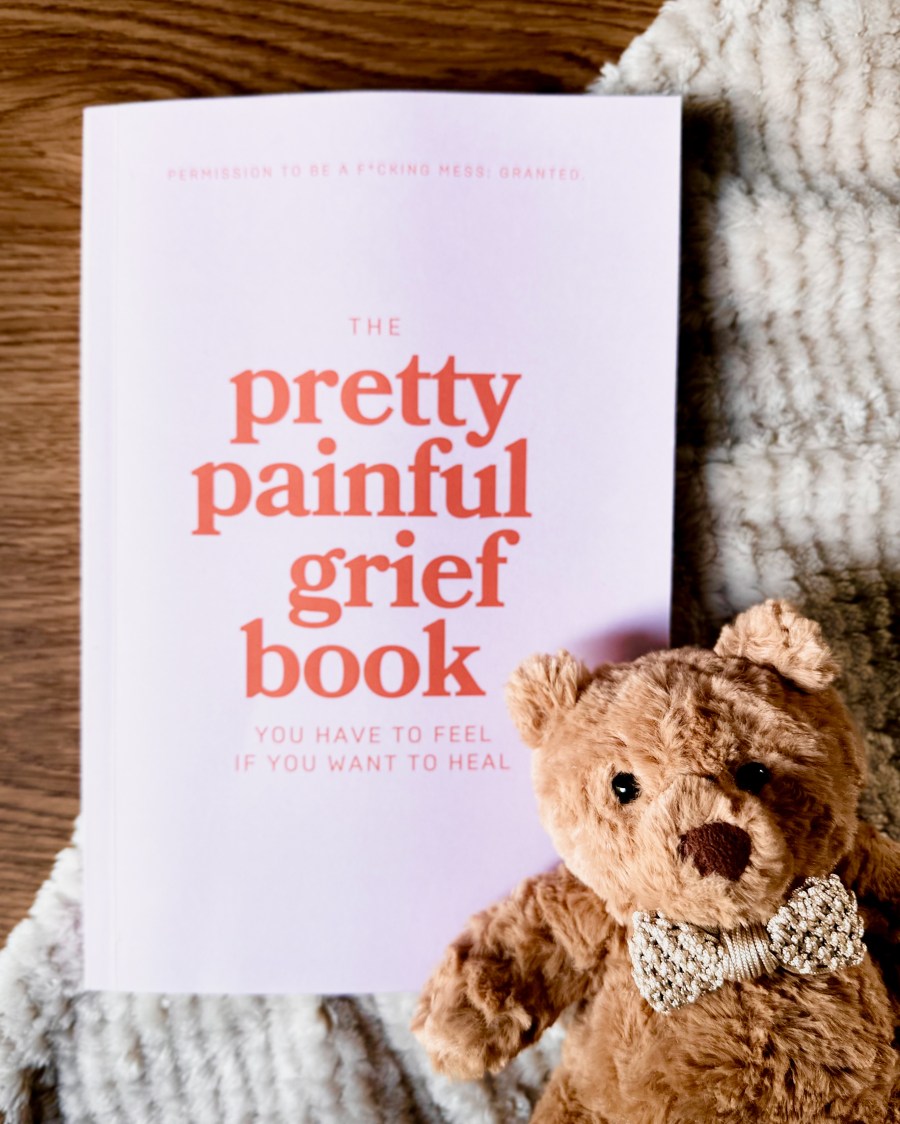
If you read my last update post, you’ll know I’m in the messy middle of recovery – not fully in my eating disorder, not fully out of it either. I’m gathering strength and courage to take the next step, and one of the ways I’m doing that is by working through my grief. Even though I feel stuck on the rope bridge between recovery and relapse, I’m still moving forward in other ways. Grief work is one of them.
I’ve written quite a few times now that I’ve been doing self-help grief work to help me cope with the grief of losing my amazing, beautiful best friend WeeGee, but I haven’t really explained what I’ve been doing. The reason for that is, a lot of the materials I’ve bought so far have been absolute rubbish and full of toxic positivity. If I wanted that kind of help, I’d just mention my grief again on Instagram.
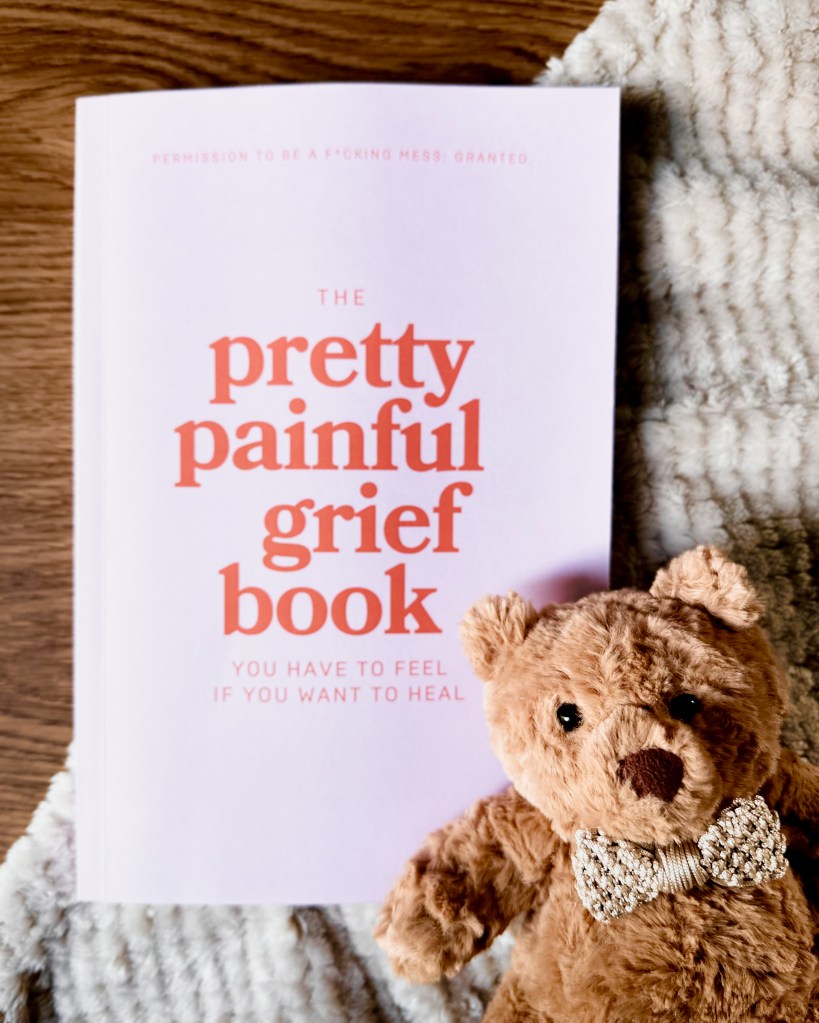
However, I finally found a book that actually feels like it’s working for me. This post is about that book – The Pretty Painful Grief Book by William Hunter Howell – and how I’ve been finding it so far.
What Is the Book About Exactly?
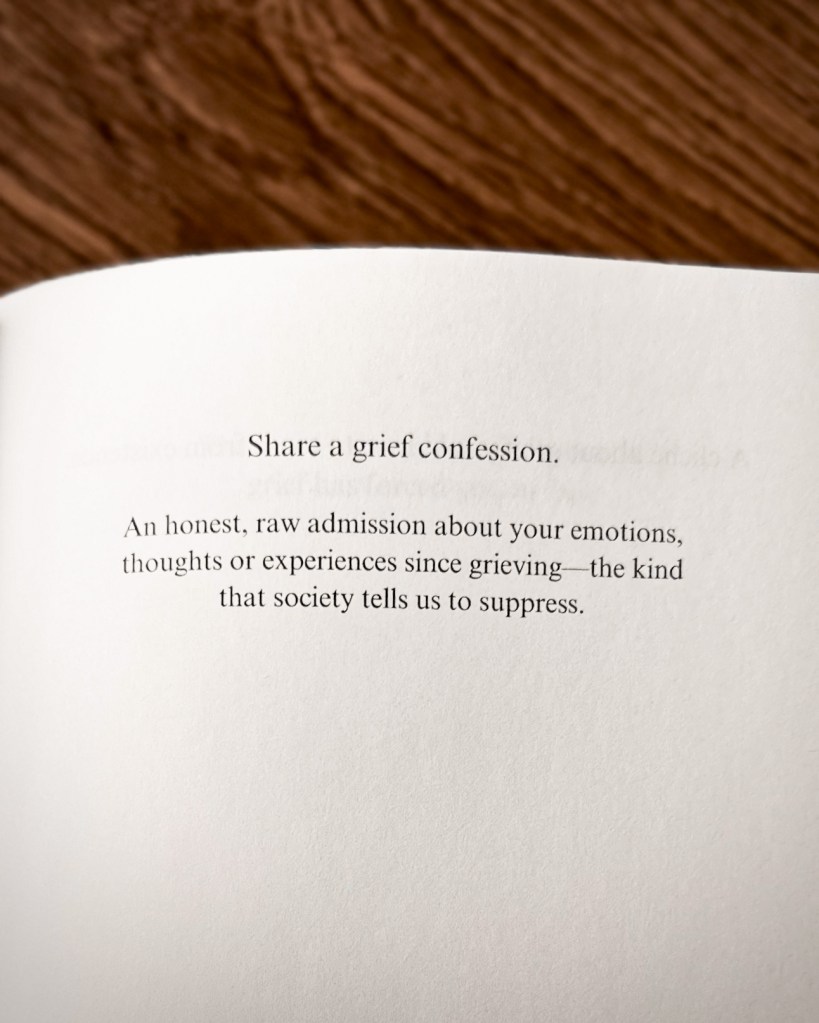
The book is a grief journal and workbook. It’s full of over 150 prompts, quotes, and information to help you sit with your grief instead of running from it. It’s completely absent of toxic positivity. Instead, it pushes you into your true, deep feelings of grief.
It asks both lovely questions about the person that died and deeply uncomfortable questions about your own emotions. It asks you to confess your darkest feelings but doesn’t make you feel shame for doing so. It actually makes you feel like what you’re feeling is normal.
It also asks me questions I really wish people had asked me about my grief and about my best friend, but they never have. One example of this is: “Have you felt their presence since they’ve been gone?” Everyone assumes the answer for me – that I have, that I feel she’s still with me. No one has actually asked me how I feel about that, or even what my beliefs are.
Instead, I’ve been told I’m wrong for feeling the way I do when I honestly, bravely and gently explained that no I had not. That I’m doing grief wrong. That maybe I didn’t love her enough if I hadn’t felt her yet. I have since felt her – but I hadn’t at the time. I was deep in my eating disorder and in denial. Don’t worry though, the book has a prompt for that too: “What’s the most painful thing you’ve heard someone say to you in your grief?”
The book also has beautiful prompts about the person who’s now gone – what they loved, what you miss most about them, what reminds you of them, and so on.
It’s just really nice to talk about how great and lovely WeeGee was so often. People usually put time limits on how long you’re “allowed” to talk about someone after they’ve died. And they stop asking pretty quickly. But this book doesn’t.
The Need for Self Help
I’ve had grief therapy, but honestly, it wasn’t great and ended early. Every time my eating disorder came up, my therapist would immediately shut it down. She’d say things like, “I’m not here for that, I can’t help you with it, stop talking about it.” The thing is, I wasn’t asking her to help with it – I was just mentioning it because it’s part of the context. I relapsed after twelve years because of grief.
My anorexia came back as a way to run from the pain I didn’t know how to face. So of course it came up in grief therapy – it’s all connected. But it didn’t matter. She’d shut me down and change the subject, insisting I focus entirely on grief, and grief alone.
But if I’ve learned anything from the prompts I’ve done in this book so far, it’s that my eating disorder and my grief are interlinked hard. Every time I start to get better in recovery, I hit a wall – and that wall is grief. I feel like I can’t progress until I have the tools to push through it, and that’s exactly what this book is helping me with.
One of the prompts even asked if I’ve coped with grief in unhealthy ways. That alone made me feel so much better. It gave me permission to be honest. I gave myself a little grace for relapsing – just because the book asked me that question without judgement.
I understand why therapists and medical professionals often want to keep things “focused” on one issue at a time. But that doesn’t make sense for how my brain or my emotions work. I can’t compartmentalise like that. I can’t move forward in recovery without accepting and feeling my grief. And I can’t feel my grief without working on it too. There’s no weight restoration when there’s a big, hecking wall of grief in the way, tripping me up every time I try so hard to do better.
The need for more holistic approaches to mental health care is sorely needed in medical settings. But because that doesn’t exist – at least not for me, despite answering that non-question, “What help do you need?” a million times and walking away with less than nothing – I knew I had to do it myself. And thanks to this book, I feel so much less alone with it.
How I’m Using the Book
I’m the type of person who wants to fix everything fifteen minutes ago, so the urge to power through this entire book in one weekend is definitely there. But surprisingly, I’ve been really healthy about how I’m using it.
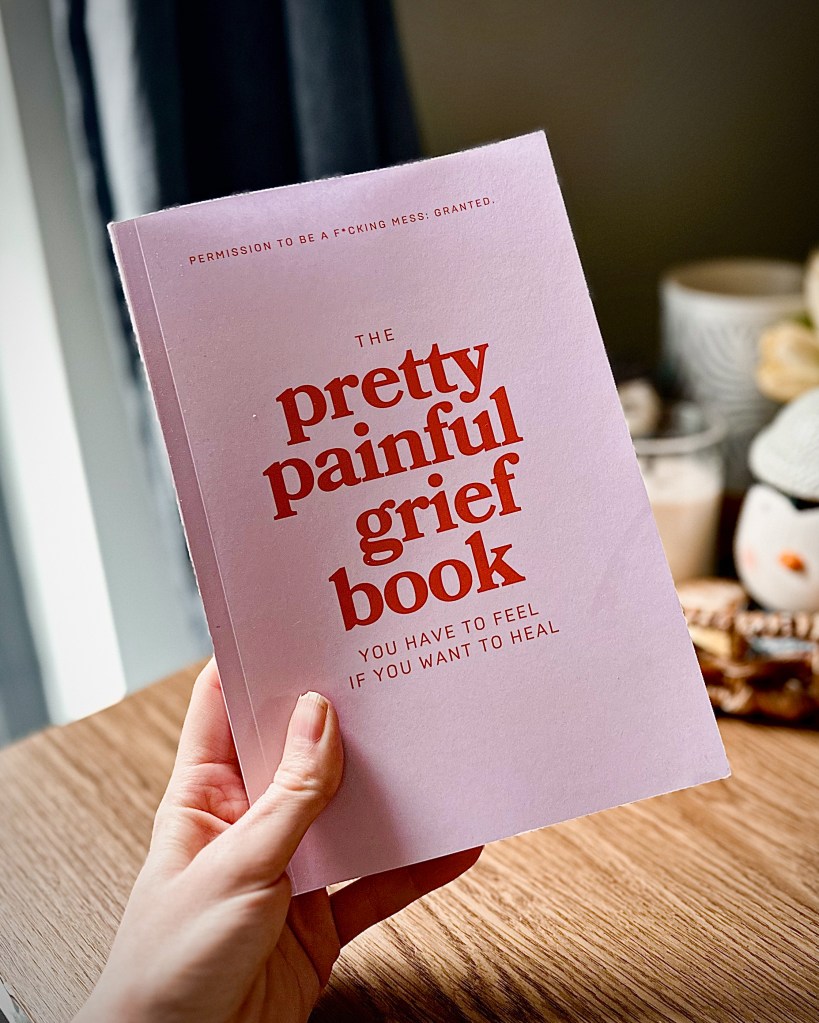
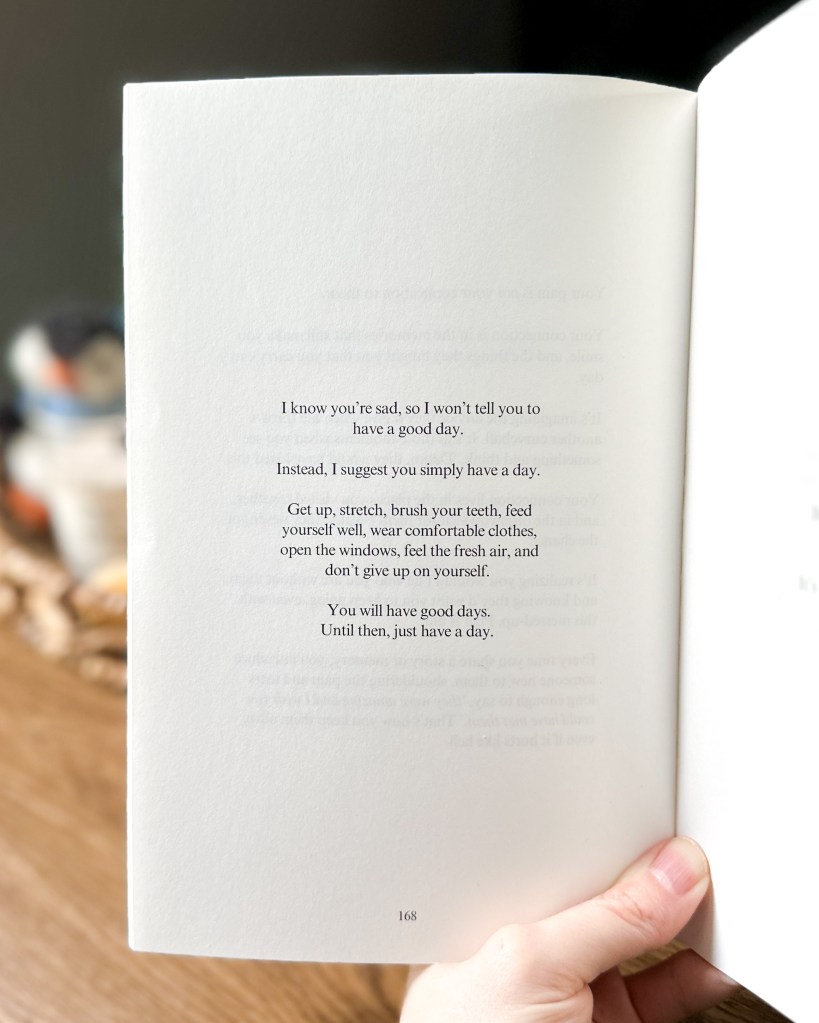
The book includes a mix of prompts – some are longer and go deep into difficult feelings, some are short one-sentence reflections, and others are small actions or activities. I’ve been doing one a day, and mixing them up. If I do a heavy, emotional prompt one day, I follow it with something lighter the next – an action or a short response. And if I’m dealing with other things, I take a day off. WeeGee deserves my full attention when I sit with my grief.
I’ve had the book for a few weeks now and worked through quite a few prompts. Some of them have been so eye-opening I might turn them into blog posts – because they connect directly to things I’ve already written about. Not all of them, obviously – there are over 150, and even though I’m open, I do have boundaries. But a few of the prompts have taught me something I didn’t expect – about grief, my ED, recovery, and myself.
Realising Who I Am Now
One part of the book that’s really helping me is the section that helps you explore who you are now. I’ve always thought of my life in two parts: before she died, and after. And my eating disorder relapse? That was me trying to go back to the “before” version of myself – the one who met WeeGee, the one who was in recovery with her. I didn’t realise until now that I also have to grieve that version of myself. The one I’ll never be again.
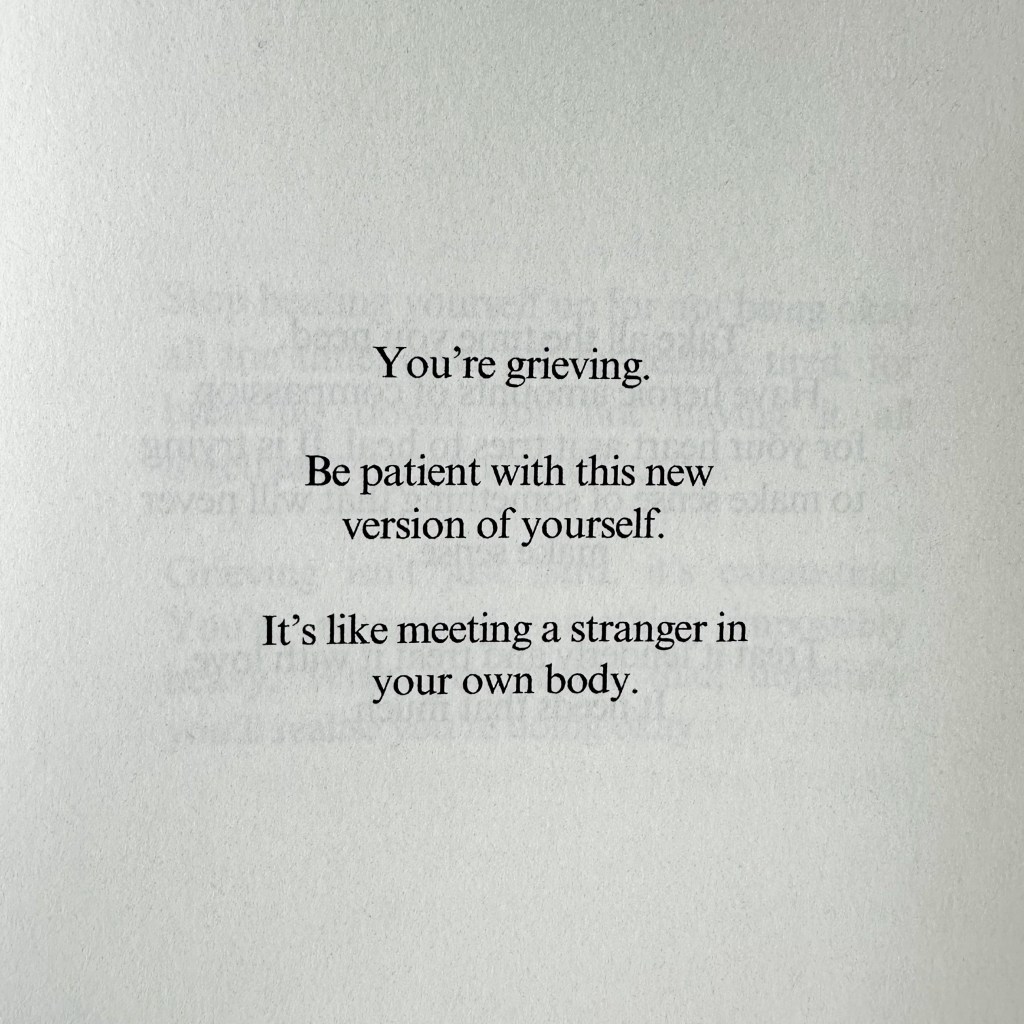
And that’s okay.
The ED was my way of digging in, trying to get myself back. Like clawing my way to the last known save point – when we were both still there, together. But now I understand: the real work is learning who I am after everything changed. Who I am now.
I know that’s one of the reasons I have to push through the wall in recovery – to find out. But it’s also one of the reasons I’m scared to push through it. I don’t know who I am on the other side. I don’t know who is waiting for me there.
Highly Recommend!
If you’ve experienced the death of a loved one, and you hate toxic positivity – and also hate what I call “narcissism in grief” (you know, “this person only existed and died to teach me a life lesson because I’m the main character and they were just a side character in their own story”) – then this book is for you.
It’s incredibly helpful and definitely the most helpful one I’ve bought. Seriously – stay away from the viral TikTok “let it go” journals. They suck.
This book will make you cry. It’ll make you feel uncomfortable or embarrassed at times, but it’ll also connect you with longing, and love. But every single time, it will also comfort you. As the book says: “You’ve got this, even when it feels like you don’t.”
I wanted to share my experience with The Pretty Painful Grief Book so far because I want to share some of the prompts I’ve written, and I thought I’d explain the book first – rather than explaining it every time. I also hope it helps someone reading this as much as it’s helped me the last few weeks. Grief is so isolating and incredibly lonely. It forces you to plaster a fake smile on your face, because opening up and having someone say something completely invalidating is often worse than being alone in it.
But to end on another quote from the book, right from the opening pages:
“Stop fake smiling, and start fucking healing.”
If you want to check out more, theres an Instagram account about the book. You’ll find some prompts and helpful quotes on there as well as the authors own grief story. No toxic positivity, just actual grief. Worth a scroll if you’re in it too.
This song felt so WeeGee. She loved Frank Turner.
 Absurd Universe
Pingback: The Anger I Tried To Starve Away – Seren's Bear Blog
Pingback: Pretty Painful Grief Letters Review – The Book That Sits With You in Grief – Seren's Bear Blog