For Eating Disorder Awareness Week, I thought I’d write about some of the myths around anorexia that send me into a full rage spiral every time I hear them.
Eating disorders are some of the most misunderstood mental illnesses out there.
Everyone seems to have an opinion, but most of those opinions are completely wrong. I’ve lived with eating disorders for most of my life, and if I had a pound for every myth I’ve heard, I’d be writing this from my mansion instead of my council flat.
This list isn’t exhaustive — there are plenty more myths I’ve ranted about (often just to myself after doomscrolling online). So, consider this the start of a rant series for awareness, education, and, let’s be honest, because I do love a good rant.
1. Anorexia Is About Vanity.
Anorexia is a complex and deadly mental illness, NOT a lifestyle choice, NOT a side effect of “selfie culture,” and definitely NOT because someone is obsessed with filters or their own reflection. I barely take selfies. I barely look in the mirror. And when I do, I’m not looking for perfection — I’m searching for the person I used to be.
Who I am while suffering from anorexia is not me. I don’t recognise myself because I am mentally ill.
I don’t want to look a certain way, and I don’t think being underweight makes me worth more. I look ill. I have dark circles under my eyes. The pockets of my hands, where fat should be, are empty, making me look far older than I am. My arms are constantly veiny, not because I’m “fit,” but because my body is desperately trying to keep me warm.
As I am over 40, I now have loose skin everywhere from weight I’ve lost, it’s visible all over my body. Vanity is not turning yourself into a human version of a Tesco carrier bag.
When I go outside, I hide my body under layers — because I’m ashamed. I’m ashamed that I’m here, in this relapse. Corrupted Clippy (what I call my eating disorder voice) whispers that I look better this way, that LESS is always BETTER — but I don’t. No one would look at me and think I’m thriving.
If this were about vanity, I wouldn’t be in relapse. My body isn’t a “goal weight”— it’s a billboard for my mental illness. I’m not showing off; I’m showing just how deeply unwell I am that I can’t even feed myself properly without losing my shit.
This isn’t a glow-up. This is a blow up, my mental illness blew up my whole life.
2. Instagram Causes Eating Disorders.
This one annoys me more than I can express — but I’ll try.
My anorexia existed long before Instagram. Back then, they blamed magazines and TV. Before that, they probably blamed Barbie dolls and Twiggy. Yet I had an eating disorder long before I even knew what one was. There was no internet. There was no talk of mental illness. But I was still a child with an eating disorder.
There’s always something to blame — some new scapegoat for the rise in eating disorders. The media does it. Worse, the NHS does it. And none of it makes ANY sense whatsoever.
First of all, if you think I’m in a relapse because I — at 41 years old — compared myself to a 20-year-old influencer with a smoothie bowl in a bikini in Bali, you are very mistaken. Why would I compare myself to someone young enough to be my child? My son is 20.
Second, you cannot “catch” an eating disorder by looking at someone who is underweight. That’s like saying you’ll develop OCD after hearing me explain how I spray down my Asda shopping with antibacterial spray when I get home. Ridiculous.
If societal messages SEEM to trigger an eating disorder, it’s because that person was already vulnerable — through trauma, genetics, or a dozen other complex factors. Instagram didn’t plant the seed; it was already there.
Third, let’s talk about the rise in eating disorders in children under 13 — the same kids who aren’t even supposed to be on Instagram. What’s causing that? I’d hazard a guess that the UK’s anti-obesity messaging in primary schools has a lot more to do with it than an influencer’s smoothie bowl ever will. The anti-obesity messages taught in primary school go against Instagrams Terms of Service.
3. People With Anorexia Are Fatphobic.
I can’t tell you how many times people have said this to me with their whole chest. I’ve been vulnerable enough to share that I’m in a relapse, triggered by losing my best friend to cancer, only to be told my entire problem is that I’m fatphobic.
Just… wow. Empathy really took a hit, didn’t it?
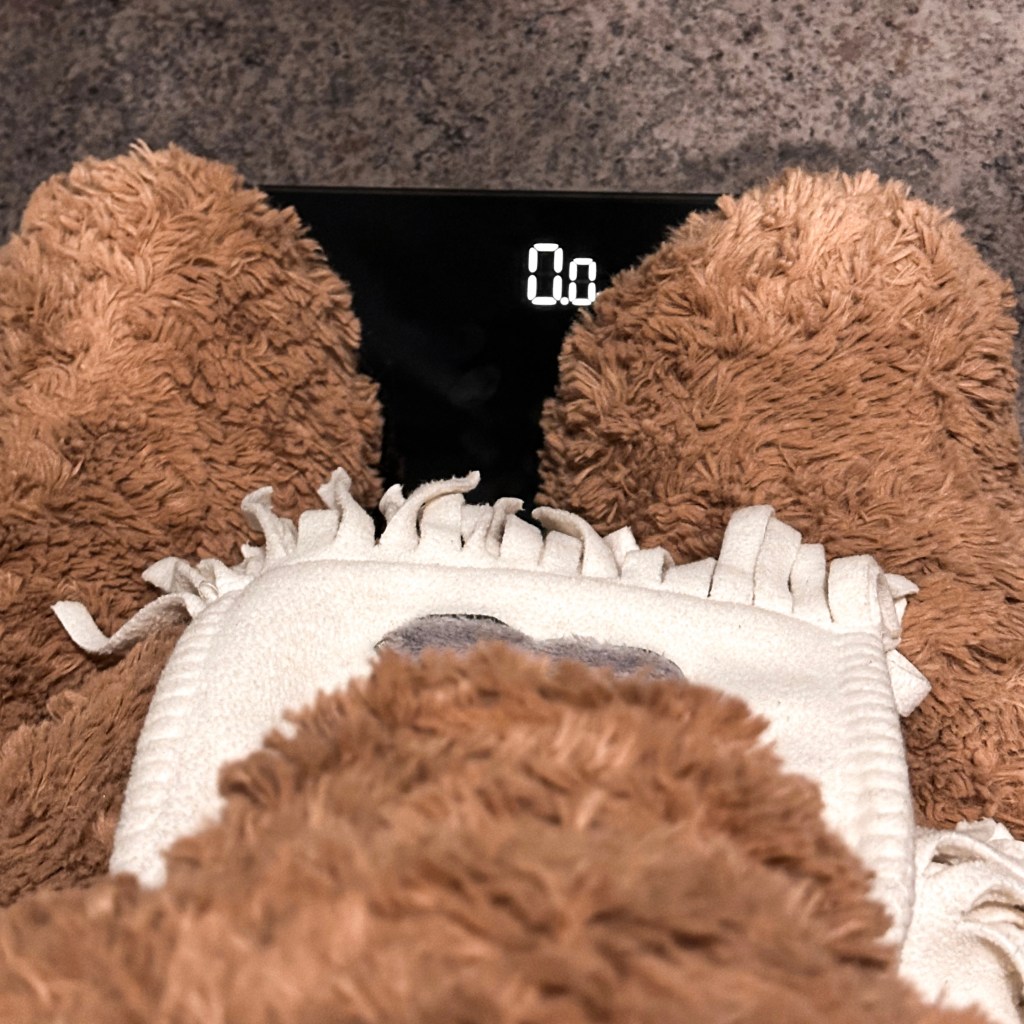
Here’s the reality: anorexia comes with a hallmark symptom of fear of weight gain. It’s literally part of the diagnostic criteria — it’s what distinguishes anorexia from other eating disorders. But fear of weight gain is NOT the same as fear of fat people.
Fear of weight gain is like a compulsion, much like OCD. It’s a numbers fixation. Corrupted Clippy, my eating disorder voice, tells me: “If the number goes down, you’ll cope better.” Spoiler: it’s a lie. When I step on the scale, I’m not thinking about anyone else’s body. I’m too busy having a meltdown over whatever the scale says to even consider anyone else.
I’m not fatphobic. I genuinely don’t care what anyone else looks like — what matters to me is someone’s soul, their personality, their heart. Your body is just a container for your soul. You’re you, and that’s what makes you unique — not the number on your scale or the shape of your body.
To take my severe mental illness — an illness that once dropped my heart rate to 46 bpm and nearly robbed me of watching my child grow up — and reduce it to some faulty value system is not only incredibly insulting, it’s flat-out wrong. It’s also deeply stigmatising.
Honestly, I half-wish anorexia was just a faulty value. I could wake up tomorrow, decide to believe something different, and be fine. But it’s not. I’m still here, severely mentally ill, and still NOT fatphobic. If someone is fatphobic, it is because they’re a judgemental asshat, not because they have an eating disorder.
4. If You Are Not Underweight, You Don’t Have An Eating Disorder.
Categorically untrue. When I was weight-restored, I was not recovered — I still had an eating disorder. I probably met the criteria for OSFED (Other Specified Feeding or Eating Disorder).
In “recovery,” I wouldn’t eat a single thing all day until 6 p.m., and then I’d eat my entire day’s worth of calories in about two hours. I still had a fear of weight gain, and this wasn’t me choosing a “one meal a day” (OMAD) lifestyle. It was me desperately trying to manage the leftovers of my anorexia.
Not eating all day felt like it gave me some control, but by night, guilt would kick in. “You haven’t eaten all day — if you don’t eat now, you’ll ruin your recovery.” So, I’d “catch up,” cramming everything into a short window. It also felt safer — if I didn’t eat all day, I could eat whatever I wanted at night without risking weight gain because, realistically, it’s hard to “overeat” in such a short time frame.
By the way, I still can’t believe OMAD is being recommended as a “healthy” way of living. I would not recommend it to anyone. It wrecked my stomach, my hormones, and my body. I only lived this way because I was trying to manage the lingering grip of my eating disorder. Even though it was harming me, I couldn’t stop.
I was at my set point, a healthy weight. No one would have had any idea I was still struggling with an eating disorder if I didn’t say anything. Weight is not an indicator of whether someone has an eating disorder or not. Eating disorders affect people at ALL weights.
5. Anorexia Only Affects Middle-Class White Teenage Girls.
I see this a lot on WordPress. And let me tell you, it’s jarring to read when you’re a 41-year-old, poor person from a working class background in an anorexia relapse. But let’s unpack this, shall we?
Yes, I’m white, and I have white privilege — it’s probably the only privilege I have. And I hate it, because it shouldn’t exist.
This stereotype ignores whole groups of people.
• Black people suffer from eating disorders.
• Men suffer from eating disorders.
• Non-binary people have one of the highest rates of eating disorders.
• Older adults suffer from eating disorders.
• Poor and underprivileged people suffer from eating disorders.
Eating disorders do not discriminate. There is no group of people that it doesn’t affect.
And no, you can’t just “grow out” of an eating disorder because it’s not a phase — it’s an illness. I kind of wish that myth was true, though. Then I wouldn’t be sat here, at 41, ranting about all of this while trying to distract myself from the fact that I’m hungry. If it were just a phase, I would have “grown out of it” years ago.
But here I am. Because people with eating disorders grow up. They grow older. And many, like me, continue to suffer.
Also people can develop eating disorders later in life for the first time. There’s no age limit on when an eating disorder can start — and there’s no guarantee that it will ever end.
And Many More Too.
This is just the start. There are so many myths that need dismantling, and trust me, despite underfuelling myself I still have the energy to rant about all of them.
Stay tuned for more myths where I’ll dive into even more misconceptions about eating disorders — especially around recovery, because wow, that’s another minefield.
If any of these myths have made you feel unseen, frustrated, or just plain exhausted, you’re not alone. And if you need a ranting partner, I’ll be here, probably ranting to my Jellycat bears while writing the next post.
I always end my posts with a song, it’s what my best friend WeeGee always did. This song felt apt for this post.
 Absurd Universe
Thanks for sharing yet another really important aspect of eating disorders. Many of these points I had no idea of, so thank you for teaching me.
LikeLiked by 1 person
Thanks so much for reading :3
LikeLiked by 1 person
You’re so welcome!
LikeLike
I have struggled with food all my life. My mom was constantly complaining about how fat she was and trying diet after diet. I wasn’t officially diagnosed until I was 53. It is a daily struggle. I am not overweight nor am I underweight. I was. I almost died. To deal with this everyday is exhausting. I hear you on all these points. I don’t know if I will ever find complete healing.
LikeLiked by 1 person
It is exhausting. I hear you on the complete healing, even when I was a normal weight I really struggled. Sorry you know this struggle too.
LikeLike
I’m so glad you’re able to spread awareness about the myths because I learned a lot today. Thank you so much for openly discussing your struggles and frustrations. Wishing you the best, dear Seren.
LikeLike